In the global agricultural and textile supply chain, the secure compression and transportation of raw materials are critical for maintaining quality and reducing logistical costs. High-quality binding materials play a silent but pivotal role in this process, ensuring that massive volumes of fiber are contained efficiently from the field to the factory.
The efficiency of harvest processing depends heavily on the reliability of the materials used to secure bales, as any failure in tension or durability can lead to material loss or safety hazards during transit. This is where specialized steel wire solutions become indispensable for large-scale agricultural operations worldwide.
Among these solutions, cotton baling wire stands out as a primary requirement for producers who need a balance of tensile strength, flexibility, and corrosion resistance to withstand diverse environmental conditions during storage and shipping.
Technical Specifications of Cotton Baling Wire
To meet the rigorous demands of the textile industry, cotton baling wire is engineered with precise dimensions. The wire gauge typically ranges from BWG4 to BWG18, with diameters spanning from 6mm down to 1.2mm, allowing users to select the appropriate thickness based on the volume and weight of the bales being produced.
Tensile strength is a critical parameter, offered in "soft" grades (380-550N/mm²) for easier tying and "stronger" grades up to 1200N/mm² for high-pressure industrial balers. This versatility ensures that the wire can withstand the immense internal pressure of compressed cotton without snapping.
The Role of Material Composition in Baling
The foundational material for these wires is primarily low carbon steel, including standards like Q195 and SAE1008. These materials provide the necessary ductility and strength required for drawing and molding processes, ensuring that the wire does not become brittle under stress.
Depending on the environment, various coatings are applied to prevent oxidation. Galvanized steel wire provides a zinc layer (30-200g/m²) for moisture resistance, while black annealed wire is used for applications where maximum flexibility is required. PVC coatings are also available for added protection against chemical exposure.
The choice of material directly impacts the elongation rate, which typically ranges between 10% and 25%. This elasticity is vital because it allows the wire to "seat" properly around the cotton bale, maintaining a tight grip even as the organic material settles over time.
Industrial Manufacturing Process and Quality Control
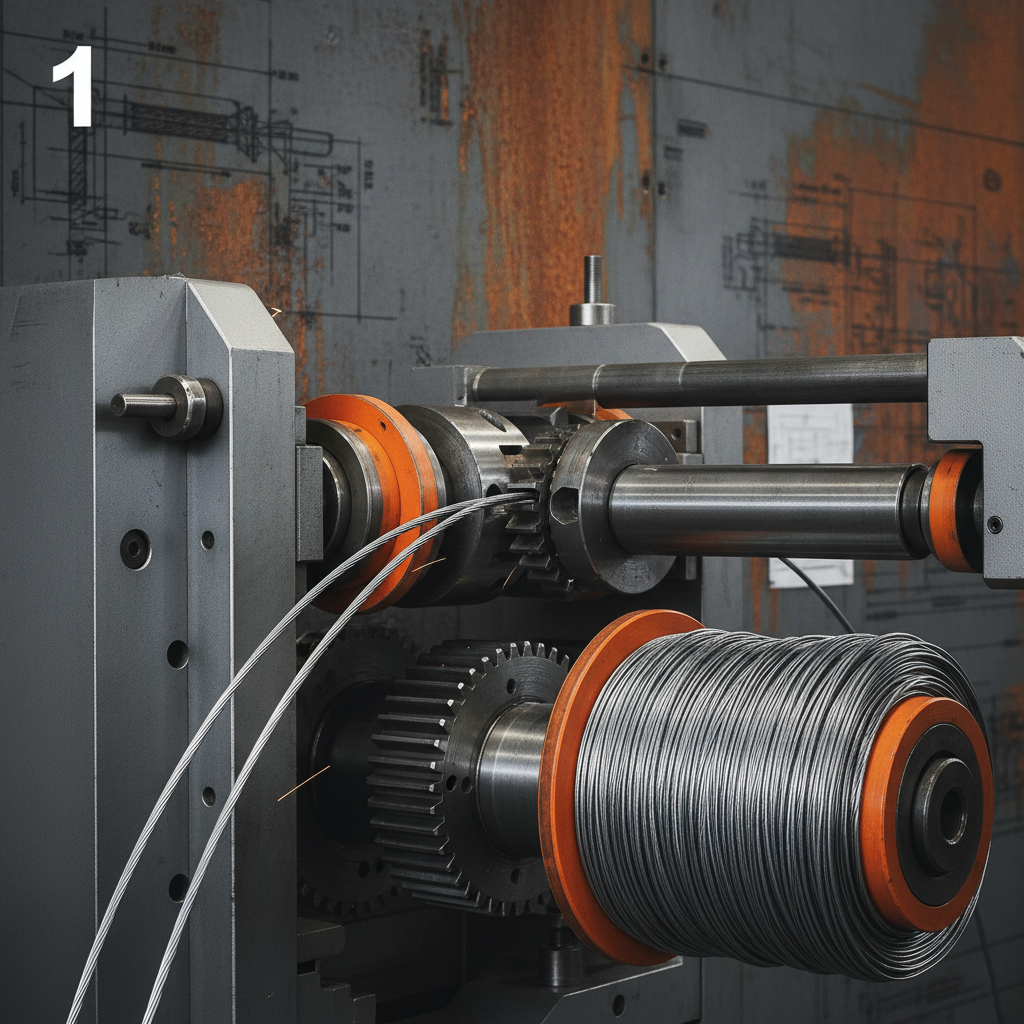
The production of high-grade cotton baling wire involves a sophisticated series of metallurgical steps. It begins with the selection of high-quality low carbon steel, which undergoes a precise drawing molding process to achieve the exact diameter required by the customer.
Following the drawing phase, the wire is subjected to picking and derusting to remove surface impurities. The most critical step is high-temperature annealing, which relieves internal stresses and optimizes the wire's flexibility, followed by a galvanizing and cooling process to lock in corrosion resistance.
Quality assurance is maintained through ISO9001 certification, ensuring that every batch meets international standards. This rigorous control prevents failures in the field, which could otherwise lead to catastrophic bale bursts during transport or loading.
Performance Metrics and Strength Analysis
Evaluating the performance of cotton baling wire requires looking at the intersection of tensile strength and elongation. A wire that is too rigid may snap during the mechanical tying process, while a wire that is too soft may stretch excessively, compromising the bale's density.
The industry utilizes standardized testing to ensure that the zinc coating is evenly distributed and that the tensile strength remains consistent across the entire length of the coil. This consistency is what allows automated baling machines to operate at high speeds without interruption.
Performance Comparison of Baling Wire Types
Global Applications in Agricultural Logistics
The use of cotton baling wire is widespread in major cotton-producing regions, from the plains of Texas and the fields of India to the agricultural hubs of Uzbekistan. In these areas, the wire is used in heavy-duty hydraulic presses to create dense, uniform bales that maximize shipping container space.
Beyond raw cotton, these high-strength wires are often adapted for other fibrous materials, including recycled textiles and industrial waste. The ability to package these materials into stable, transportable units is essential for the global circular economy and waste management systems.
Long-term Value and Sustainability
From a cost-benefit perspective, investing in premium cotton baling wire reduces long-term operational risks. Low-quality wires often suffer from premature corrosion or "necking" (thinning), which can lead to bale collapse during storage, resulting in significant material contamination and financial loss.
Sustainability is also integrated into the production process. The use of recyclable steel and the implementation of energy-efficient annealing furnaces reduce the carbon footprint of the manufacturing process. Furthermore, the durability of galvanized coatings extends the life of the wire, reducing the frequency of replacements.
The logistical reliability provided by high-spec wires ensures a smoother transition from the farm to the gin and finally to the textile mill. This reliability fosters trust between producers and global buyers, ensuring that the physical integrity of the commodity is maintained across thousands of miles.
Challenges and Selection Criteria for Baling Wire
Choosing the right cotton baling wire requires a careful analysis of the environmental conditions. For instance, bales stored in humid coastal regions require a higher zinc coating (up to 200g/m²) to prevent rust, whereas indoor warehouse storage can utilize standard black annealed wire to reduce costs.
Another challenge is the compatibility between the wire gauge and the baling machinery. Using a wire that is too thick can cause wear and tear on the machine's tying mechanism, while a wire that is too thin may not provide the necessary clamping force to keep the bale compressed.
The final consideration is the packaging and delivery logistics. With MOQ requirements typically at 5 tons and packaging options ranging from plastic-wrapped coils to heavy-duty pallets (10-500kg), producers must plan their inventory to avoid downtime during the peak harvest season.
Comparative Analysis of Baling Wire Specifications
| Wire Grade |
Tensile Strength |
Corrosion Resistance |
Primary Use Case |
| Soft Low Carbon |
380-550 N/mm² |
Low |
Manual tying/Short term |
| Heavy Galvanized |
500-800 N/mm² |
High |
Export shipping/Outdoor |
| High Tensile |
Up to 1200 N/mm² |
Medium |
High-pressure industrial |
| Black Annealed |
300-500 N/mm² |
Low |
General binding/Indoor |
| PVC Coated |
400-600 N/mm² |
Very High |
Chemical environments |
| Standard Q195 |
350-550 N/mm² |
Medium |
General purpose baling |
FAQS
For heavy-duty industrial baling, a wire gauge between BWG4 and BWG10 is typically recommended. These thicker diameters provide the necessary tensile strength to hold high-density compressed cotton without the risk of snapping under extreme pressure, especially during the loading and unloading process of shipping containers.
Galvanization applies a protective zinc coating (ranging from 30-200g/m²) that prevents the underlying steel from oxidizing. This is crucial for cotton bales that are stored in outdoor yards or transported via sea freight, as it prevents rust from staining the raw cotton and ensures the wire maintains its structural integrity.
Soft wires (380-550N/mm²) are more ductile and easier to bend, making them ideal for manual tying or low-pressure applications. Stronger wires (up to 1200N/mm²) are engineered for high-tension mechanical balers where the primary goal is maximum compression and zero stretching during long-term storage.
Yes, packaging can be tailored to specific logistical needs. Common options include binding with wire followed by plastic wrapping, palletization for easy forklift handling, or custom weights per bundle ranging from 10kg to 500kg to fit the capacity of your loading equipment.
The regular delivery time for standard specifications is approximately 20 days. This window allows for the drawing, annealing, and galvanizing processes to be completed and quality-checked according to ISO9001 standards before the shipment is dispatched.
Yes, low carbon steel (such as SAE1008) is the industry standard because it offers the best balance of strength and flexibility. High-carbon steels are often too brittle for the twisting and bending required in baling, while low carbon steel can be drawn and annealed to the perfect specification for agricultural use.
Conclusion
In summary, the selection of cotton baling wire is a critical decision that affects the entire agricultural supply chain. From the precise control of wire gauge and tensile strength to the application of corrosion-resistant zinc coatings, every technical detail serves to ensure that raw materials are preserved, protected, and transported with maximum efficiency. By adhering to ISO9001 standards and utilizing a rigorous manufacturing process of drawing and annealing, producers can mitigate the risks of bale failure and material loss.
Looking forward, the industry is moving toward even more sustainable materials and automated precision baling systems. For producers and distributors, the key to long-term success lies in choosing a supplier that balances technical performance with logistical flexibility. We invite you to optimize your baling operations by exploring our full range of professional wire solutions. Visit our website: www.yjdwiremesh.com