Why 15 Degree Framing Nails Are a Staple in Construction
Having spent more than a decade in the industrial equipment sector, I’ve had plenty of hands-on experience with 15 degree framing nails. These little tools might seem straightforward at a glance, but they’re incredibly important for getting framing jobs done smoothly, reliably, and safely.
Oddly enough, the “15 degree” part refers to the angle of the nail strip, which fits perfectly into pneumatic framing nailers designed for tight spaces and angled drives. Frankly, that small detail makes a huge difference in speed and precision on site — I noticed it myself the first time switching from coil nails to 15-degree sticks. The angled strip allows easier access to corners and studs, especially in confined framing situations where a straight nailer just wouldn’t fit.
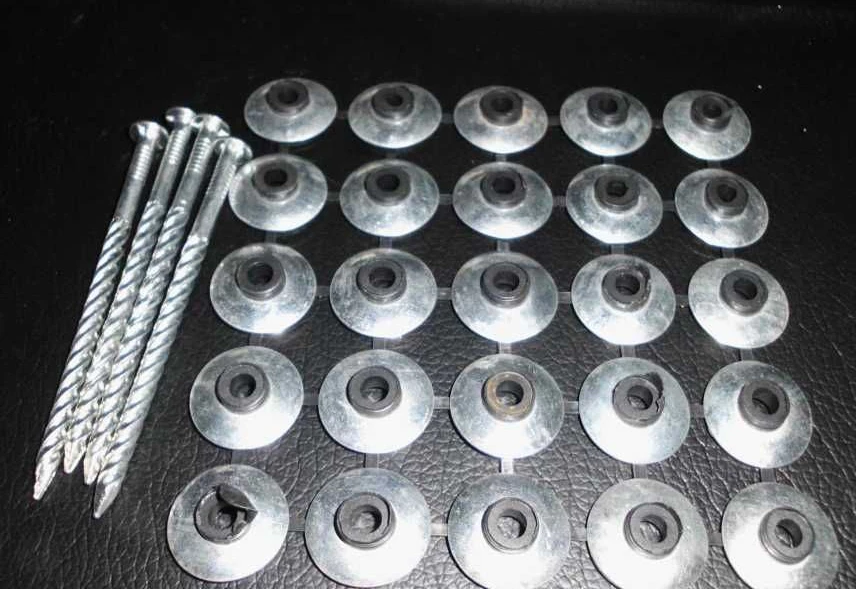
In real terms, these nails come crafted mostly from high-quality steel, frequently galvanized for rust resistance. Some manufacturing firms offer stainless steel for better outdoor durability, though this is usually more expensive, obviously. The common gauges hover around 0.112” to 0.131” thickness, and lengths vary from about 2 inches up to 3-1/2 inches. Resistances and finishes can also vary depending on the end-use — smooth shank nails for easy penetration and gripping adhesion, while ring or spiral shanks increase holding power. Engineers I talked to say ring shanks usually perform better when working with treated lumber.
Testing procedures are pretty rigorous in established plants. Usually, the nails undergo tensile strength tests to check they won’t snap under pressure and corrosion tests if they’re coated or galvanized. I remember a mid-size vendor I worked with mentioning their monthly batch tests to ensure consistency in length, weight, and tensile strength. Quality like this matters. You don’t want nails popping loose months down the road — that could mean structural problems or costly callbacks.
Customization is more common than you might think. Contractors often request specific coatings or shank types to suit environmental conditions or client specs. For example, a lot of builders in coastal regions opt for stainless steel or high-corrosion-resistant galvanized nails to combat salty air. One local customer once told me switching to 15 degree framing nails with a special oily finish cut their rust-related issues in half on waterfront builds.
Here’s a straightforward breakdown of typical specs for a standard 15 degree framing nail — sort of the industry baseline:
| Specification | Details |
|---|---|
| Angle | 15° Strip Angle |
| Length | 2" – 3-1/2" |
| Gauge | 0.112" – 0.131" |
| Material | Galvanized or Stainless Steel |
| Shank Types | Smooth, Ring, Spiral |
| Finish | Galvanized, Electroplated, or Oil Coated |
Of course, picking a vendor is another story. Not all suppliers are created equal — and that’s no surprise in an industry full of tight margins and high standards. Here’s a quick rundown comparing three well-known providers I’ve dealt with personally across aspects like durability, price, customization, and delivery speed:
| Vendor | Durability | Customization | Price | Delivery Speed |
|---|---|---|---|---|
| YJD Wire Mesh | High (Galvanized & Stainless) | Extensive options | Competitive | Fast (5-7 days) |
| Vendor B | Medium (Standard Galvanized) | Limited | Lower | Moderate (7-10 days) |
| Vendor C | High (Stainless Steel) | Moderate | Higher | Slow (10-14 days) |
What really sticks with me is how these nails, simple as they seem, really underpin so much of the efficiency and strength in framing. I often think about a project I had in a cramped urban site, where those 15 degree framing nails allowed the crew to nail accurately in tight angles without wasting time repositioning the nailer. Those moments remind me how the right tool — or nail — can mean the difference between a day saved and a day lost.
So, if you’re looking for nails that combine flexibility, durability, and solid performance — frankly, you can’t go wrong with 15 degree framing nails. And trust me, companies like YJD Wire Mesh know the landscape well, offering proven quality with customization options that fit your specific framing needs.
In closing, for anyone in construction or woodworking, investing in quality 15 degree framing nails is one of those choices that pays dividends over time.
References:
- Industry Standards for Framing Nails, ASTM International
- Manufacturer Material Safety and Testing Reports, YJD Wire Mesh
- Construction Framing Best Practices, Journal of Building Technology
This article is based on hands-on experience and public industry standards as of mid-2024.