Introduction to Precision Engineered Wire Solutions and Industry Trends
In the demanding landscape of modern industrial applications, the foundational quality of raw materials dictates the integrity and efficiency of end products. Among these, straightened wire stands out as a critical component, essential for sectors ranging from construction and agriculture to manufacturing and specialized fabrication. This engineered product, often referred to as straight cut wire or straight and cut wire, provides unparalleled consistency, precision, and ease of handling, significantly streamlining production processes and improving final product quality.
The global market for wire products is experiencing robust growth, driven by an escalating demand in infrastructure development, automotive manufacturing, and sustainable energy projects. Specifically, the segment for pre-cut, straightened wire sees a heightened adoption due to its advantages in automated manufacturing lines, reducing material waste and labor costs. Industry reports project a steady CAGR for precision wire products, reflecting a clear trend towards value-added, processed materials that offer immediate usability and superior performance characteristics. This upward trajectory underscores the indispensable role of high-quality, specialized wire products in facilitating industrial innovation and operational excellence across various B2B verticals.
The need for precise dimensions, consistent material properties, and ready-to-use formats has never been more pronounced. Manufacturers are continuously seeking reliable suppliers who can deliver not just raw materials, but engineered components that integrate seamlessly into complex production systems, such as advanced robotics and CNC machinery. This emphasis on pre-processing and quality assurance at the source ensures that subsequent manufacturing stages are executed with maximum efficiency and minimal downtime.
The Precision Manufacturing Process of Straightened Wire
The production of high-quality straightened wire is a meticulous multi-stage process designed to achieve exacting dimensional accuracy, superior mechanical properties, and excellent surface finish. This engineered product is not merely a raw material but a semi-finished component critical for downstream manufacturing. Understanding its process flow highlights the commitment to precision that differentiates top-tier suppliers.
Raw Material Selection
The foundation of exceptional straightened wire begins with the rigorous selection of raw materials. Typically, this includes high-grade low-carbon steel, high-carbon steel, stainless steel (e.g., AISI 304, 316), and sometimes specialized alloys. These materials are chosen based on the intended application, dictating properties such as tensile strength, ductility, corrosion resistance, and weldability. For instance, low-carbon steel (like SAE 1008/1010) is favored for general construction and fencing due to its malleability, while stainless steel is essential for corrosive environments in petrochemical and food processing industries. Each coil of raw wire rod undergoes initial metallurgical analysis to confirm chemical composition and mechanical integrity.
Wire Drawing Process
The initial wire rod, typically 5.5mm to 8mm in diameter, is drawn through a series of progressively smaller dies. This cold working process reduces the wire's diameter to the desired gauge while simultaneously enhancing its tensile strength and improving surface finish. Lubrication is critical during drawing to minimize friction, heat generation, and die wear, ensuring a smooth, defect-free wire surface. Multiple drawing stages are often employed, interspersed with annealing processes for certain material types to restore ductility and prevent excessive work hardening, especially for fine gauge wires.
Straightening and Cutting
This is the definitive stage where the coiled wire is transformed into precision straightened wire. Advanced straightening machines utilize a combination of mechanical and rotary straightening techniques. The wire is fed through a series of rollers or spinners that apply controlled tension and bending forces, effectively removing the inherent coil set and achieving absolute linearity. Following straightening, integrated CNC (Computer Numerical Control) cutting mechanisms precisely sever the wire to specified lengths. This automated process ensures remarkably tight length tolerances, often within ±1mm, which is crucial for applications requiring exact dimensions and consistent part feeding in automated production lines.
Quality Control and Testing Standards
Adherence to international standards is paramount. Our manufacturing processes are rigorously controlled under ISO 9001 quality management systems. Each batch of straightened wire undergoes extensive testing, including:
- Tensile Strength Test: According to ASTM A370 or EN 10002-1, ensuring the wire meets specified breaking strength requirements.
- Yield Strength & Elongation: Critical for understanding the material’s deformation characteristics under stress.
- Dimensional Accuracy: Micrometer measurements ensure diameter consistency and adherence to specified tolerances. Length accuracy is checked with calibrated optical or laser measuring systems.
- Surface Finish Inspection: Visual and tactile inspections, sometimes aided by eddy current testing, to detect any surface defects, pitting, or rust that could compromise performance.
- Bend Test: For certain applications (e.g., concrete reinforcement), the wire's ability to withstand bending without cracking is crucial, tested per ASTM A82/A185.
These tests guarantee that the straightened wire consistently meets or exceeds industry benchmarks, contributing to an extended service life and reliable performance in demanding environments.
Surface Treatment
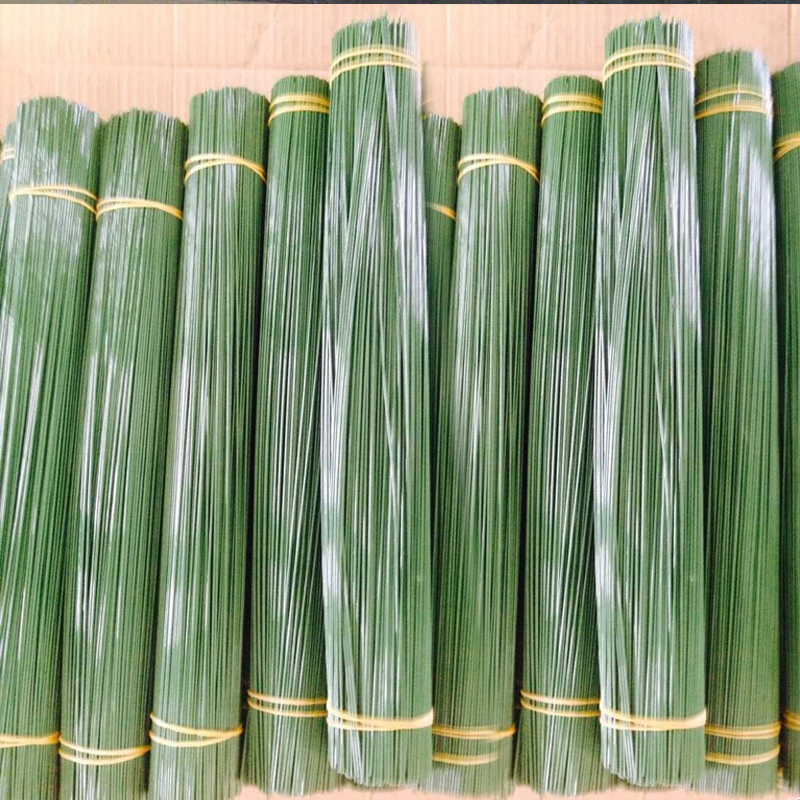
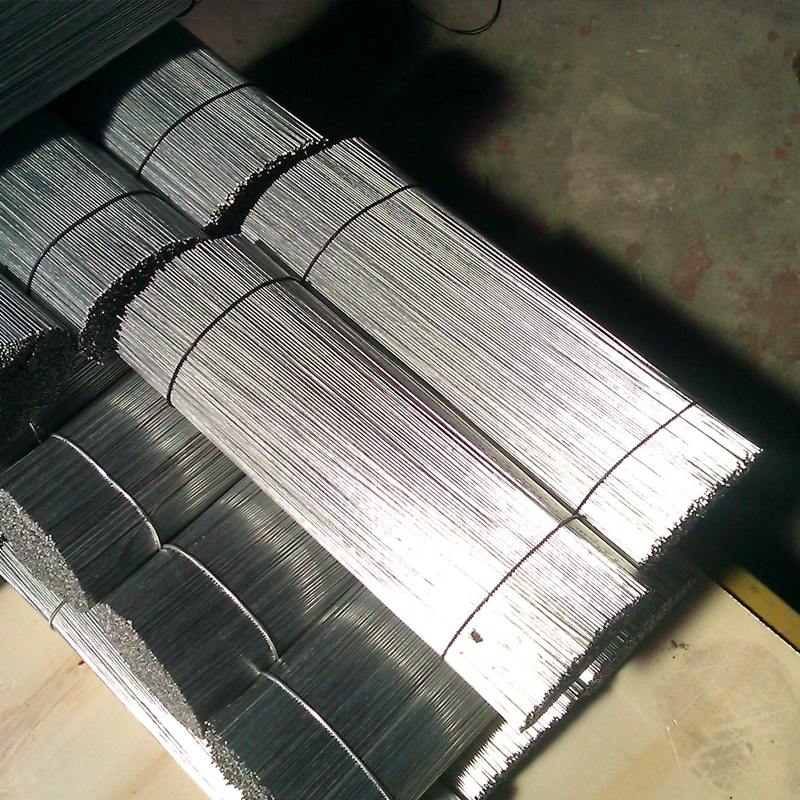
Depending on the application, straightened wire can undergo various surface treatments. Galvanization (hot-dip or electro-galvanization) provides a sacrificial zinc coating that offers excellent corrosion resistance, extending service life significantly in outdoor or humid conditions, common for straight cut iron wire. PVC coating can add further protection and aesthetic value, while phosphating or oiling prevents surface oxidation during storage and transport. These treatments are essential for optimizing performance in diverse operating conditions, particularly in industries like water supply & drainage and petrochemicals where exposure to aggressive environments is common.
Schematic Process Flow
1. Raw Material
(Wire Rod Coil)
2. Wire Drawing
(Diameter Reduction)
3. Straightening
(Coil Set Removal)
4. Precision Cutting
(Length Accuracy)
5. Surface Treatment
(Coating/Finishing)
6. Packaging & Dispatch
(Ready for Use)
In-Depth Technical Specifications of Straightened Wire
The technical parameters of straightened wire are crucial for engineers and procurement specialists to ensure compatibility with specific industrial applications. These specifications dictate performance, durability, and cost-effectiveness. Our product range encompasses a wide array of options tailored to meet diverse project demands.
Standard Product Specification Table: Straight Cut Wire
| Parameter | Specification Range | Typical Value (Example) | Applicable Standard |
|---|---|---|---|
| Material Grades | Low Carbon Steel (SAE 1006-1010), High Carbon Steel (SAE 1045-1070), Stainless Steel (AISI 304, 316), Galvanized Steel | SAE 1008 | ASTM A82, EN 10016-1 |
| Wire Diameter | 0.8 mm to 6.0 mm (0.031" to 0.236") | 2.5 mm | ASTM A641, EN 10218-2 |
| Length | 200 mm to 6000 mm (8" to 236") | 1000 mm | Custom per order |
| Length Tolerance | ±0.5 mm to ±2.0 mm, depending on length | ±1.0 mm | Internal QA/QC |
| Tensile Strength | 350 MPa to 1100 MPa (50,000 to 160,000 PSI) | 450 MPa | ASTM A370, ISO 6892-1 |
| Yield Strength | 250 MPa to 900 MPa (36,000 to 130,000 PSI) | 300 MPa | ASTM A370, ISO 6892-1 |
| Surface Finish | Bright, Electro Galvanized, Hot-Dipped Galvanized, PVC Coated | Hot-Dipped Galvanized | ASTM A641, EN 10244-2 |
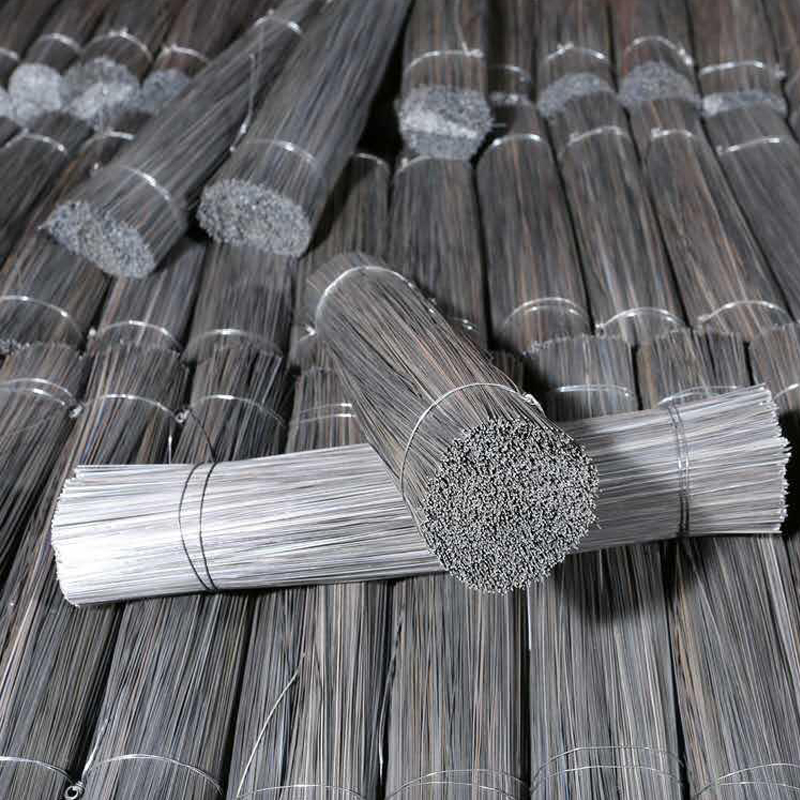
Comparison: Black Annealed vs. Galvanized Straight Cut Wire
The choice between black annealed and galvanized straight cut wire largely depends on the specific environmental and performance requirements of the application. Each type offers distinct advantages:
| Feature | Black Annealed Straight Cut Wire | Galvanized Straight Cut Wire (Hot-Dip) |
|---|---|---|
| Material | Low Carbon Steel (untreated) | Low Carbon Steel with Zinc Coating |
| Corrosion Resistance | Low; Prone to rust, suitable for indoor or temporary use | High; Excellent protection against rust and weathering (up to 20-30 years in mild conditions) |
| Flexibility/Ductility | Very high; Easy to bend and tie due to annealing process | Good; Zinc coating does not significantly impact ductility, though slightly less flexible than annealed |
| Weldability | Excellent; No coating interference | Good; Requires ventilation due to zinc fumes, may need post-weld touch-up for corrosion protection |
| Typical Applications | Tying wire in construction (rebar), bundling, crafts, temporary fixes | Fencing, gabion baskets, agricultural trellising, outdoor structures, marine applications (with proper coating thickness) |
| Cost | Lower initial cost | Higher initial cost, but lower lifecycle cost due to durability |
This detailed comparison aids B2B clients in making informed decisions, balancing initial investment with long-term performance and maintenance requirements for their specific projects involving straight cut iron wire.
Key Application Scenarios and Target Industries for Straightened Wire
The versatility and precision of straightened wire make it an indispensable material across a myriad of industrial and commercial applications. Its ability to be precisely cut and formed streamlines production processes, making it a preferred choice for manufacturers seeking efficiency and reliability.
Construction and Infrastructure Development
- Concrete Reinforcement: Galvanized straight cut wire is extensively used as tie wire for securing rebar grids in concrete structures, ensuring structural integrity and longevity. Its uniform length and straightness facilitate rapid and secure tying, crucial for large-scale projects.
- Pre-fabricated Components: Integral for producing pre-cast concrete elements, mesh panels, and various structural components where precise wire placement is essential.
- Gabion Baskets: Heavy gauge straight cut wire forms the cages for gabion structures, used in erosion control, retaining walls, and landscaping. The strength and corrosion resistance (especially of galvanized versions) ensure long-term stability.
Agriculture and Fencing
- Agricultural Support Systems: Used in vineyards, orchards, and trellising systems for crop support, guiding plant growth and maximizing yield. The straightness and rigidity are critical for durable support structures.
- Perimeter Fencing: Galvanized straight cut wire is a primary component in constructing various types of fences, including livestock enclosures, garden fences, and general boundary demarcations. Its resistance to environmental elements ensures a long service life.
- Baling and Bundling: For packaging hay, straw, or recycling materials, straight and cut wire offers strong and reliable bundling solutions.
Manufacturing and Industrial Fabrication
- Wire Forms and Components: Manufacturers use straight cut wire to produce hooks, hangers, grids, racks, and various custom-formed wire products for appliances, automotive parts, and retail displays.
- Welded Wire Mesh: Precision cut and straightened wires are welded together to form mesh panels for security fencing, animal cages, machinery guards, and filtration systems.
- Packaging: For bundling heavy goods, securing industrial loads, and general packaging applications requiring robust tying.
Specialized Industries: Petrochemical, Metallurgy, Water Supply & Drainage
In industries with extreme conditions, specialized straightened wire (e.g., stainless steel or heavily galvanized) is critical:
- Petrochemical: Used in filtration systems, mesh for catalytic converters, and as support for insulation in pipelines and processing units where high temperature and corrosive environments demand superior material integrity and corrosion resistance.
- Metallurgy: Employed in various forms within foundries and metalworking, from reinforcing molds to manufacturing screens for material sorting.
- Water Supply & Drainage: Stainless steel straight cut wire is ideal for screens, filters, and supports in water treatment plants and sewage systems, offering energy saving benefits through efficient filtration and excellent corrosion resistance against wastewater chemicals.
Unparalleled Technical Advantages of High-Quality Straightened Wire
Investing in premium straightened wire offers a multitude of technical and operational advantages that significantly impact project efficiency, cost-effectiveness, and product longevity. These benefits are particularly pronounced in high-volume manufacturing and precision engineering applications.
- Exceptional Dimensional Precision: The manufacturing process ensures minimal variation in diameter and length. This precision is critical for automated production lines, robotics, and CNC bending machines, reducing setup times and minimizing errors in complex fabrications. Consistent dimensions lead to predictable performance and superior fit in assemblies.
- Superior Straightness (Reduced Coil Set): Eliminating the inherent curvature of coiled wire, straightened wire ensures easier handling, feeding, and processing. This dramatically reduces material waste associated with straightening on-site and enhances the aesthetic and functional quality of the final product.
- Enhanced Material Properties: Through controlled wire drawing and heat treatment (annealing where applicable), the mechanical properties of the wire are optimized. This includes improved tensile strength, yield strength, and ductility, ensuring the wire performs reliably under specific load and environmental conditions, extending the service life of end products.
- Cost Efficiency and Waste Reduction: By receiving pre-cut, pre-straightened material, manufacturers eliminate the need for in-house straightening and cutting equipment, saving on capital expenditure, maintenance, and operational labor. Furthermore, the precise lengths provided minimize scrap, leading to significant material cost savings and environmental benefits. This directly translates to energy saving as less post-processing is required.
- Optimized Surface Finish and Coatings: Depending on the application, various surface treatments such as galvanization or PVC coating can be applied during production. These coatings enhance corrosion resistance, offering robust protection against rust and environmental degradation, thereby extending the lifespan of products in harsh environments, such as those found in petrochemical or water treatment facilities.
- Streamlined Logistics and Inventory Management: Pre-cut lengths simplify storage, handling, and inventory tracking. Instead of managing cumbersome coils, businesses can manage precise quantities of ready-to-use components, improving warehouse efficiency and reducing logistical complexities.
- Consistency in Production: For industries reliant on continuous, high-volume production, the unwavering consistency of straightened wire is invaluable. It ensures uniform product quality, reduces defects, and supports predictable manufacturing cycles.
These cumulative advantages underscore why sophisticated industries prioritize high-quality straight and cut wire as a strategic choice for superior product development and operational efficiency.
Choosing the Right Straightened Wire Manufacturer: A Vendor Comparison Guide
Selecting the appropriate supplier for straightened wire is a strategic decision that impacts product quality, operational costs, and supply chain reliability. B2B decision-makers must evaluate several critical factors beyond just price to ensure a sustainable and productive partnership with straightened wire manufacturers.
Key Criteria for Vendor Evaluation:
- Quality Assurance & Certifications: A reputable manufacturer will possess comprehensive quality management systems (e.g., ISO 9001:2015) and product-specific certifications (e.g., CE, ASTM, EN standards). This demonstrates a commitment to consistent quality and adherence to international benchmarks. Request test reports and quality control documentation.
- Technical Expertise & R&D: Evaluate the manufacturer's technical capabilities, including their in-house engineering team and research and development initiatives. A supplier with strong technical acumen can provide valuable insights into material selection, process optimization, and custom solutions.
- Customization Capabilities: The ability to provide customized lengths, diameters, material grades, and surface finishes is paramount for specialized applications. Assess their flexibility and willingness to develop tailored solutions that perfectly integrate with your unique production requirements.
- Lead Times & Fulfillment Reliability: Timely delivery is critical for maintaining production schedules. Investigate average lead times, production capacity, and historical on-time delivery rates. A manufacturer with robust logistics and efficient production planning minimizes supply chain disruptions.
- Customer Support & After-Sales Service: Evaluate the responsiveness and helpfulness of their customer service. Post-purchase support, technical assistance, and clear warranty policies are indicators of a reliable long-term partner.
- Industry Experience & Reputation: Longevity in the industry, positive customer feedback, and a portfolio of reputable partner clients (especially within your target industry like petrochemical or metallurgy) attest to a manufacturer's trustworthiness and experience.
Vendor Comparison Table (Illustrative)
| Criteria | Manufacturer A (Our Company) | Manufacturer B (Competitor) | Manufacturer C (Competitor) |
|---|---|---|---|
| ISO 9001 Certified | Yes, Annually Audited | Yes, Last Audit 2021 | No Public Info |
| Wire Diameter Range | 0.8mm - 6.0mm | 1.0mm - 5.0mm | 1.5mm - 4.0mm |
| Length Tolerance | ±0.5mm (for lengths <1m) | ±1.0mm (for lengths <1m) | ±2.0mm (for lengths <1m) |
| Customization Options | Extensive (material, coating, length, packaging) | Limited (length, basic coating) | Very Limited |
| Average Lead Time | 7-14 Business Days | 10-21 Business Days | 14-28 Business Days |
| Technical Support | Dedicated Engineering Team | Standard Customer Service | Email Only |
Tailored Solutions for Your Straightened Wire Requirements
Recognizing that no two industrial applications are identical, we specialize in providing highly customized solutions for straightened wire. Our approach goes beyond standard product offerings to deliver materials precisely engineered for your specific operational demands, ensuring optimal performance and cost-efficiency.
Comprehensive Customization Options:
- Material Specification: Beyond standard low carbon steel, we offer custom runs in high carbon steel for increased strength, various grades of stainless steel (e.g., 304, 316, 304L, 316L) for enhanced corrosion resistance, and specialized alloys to meet unique chemical or environmental challenges.
- Exact Diameter and Length: Our advanced CNC cutting and straightening machinery allows for precise diameter and length specifications, tailored to the millimeter. This eliminates the need for further processing on your end, integrating seamlessly into your manufacturing workflow.
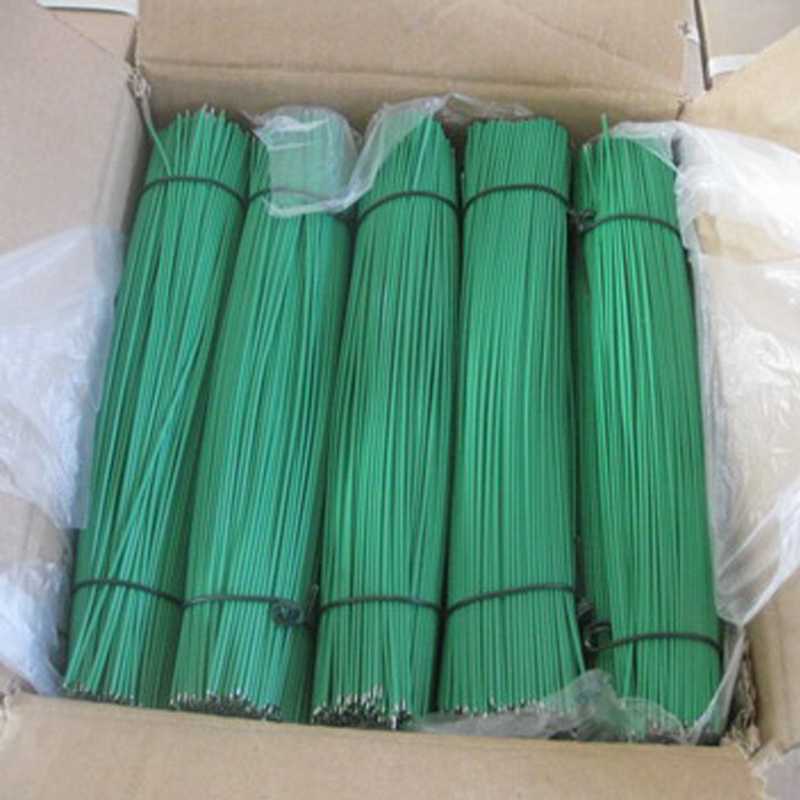
- Surface Finish and Coatings: Choose from a range of protective and functional coatings including hot-dip galvanization (various zinc coating weights), electro-galvanization, PVC coating in specific colors, or even plain bright finish for applications where post-processing or aesthetics are key. Our expertise extends to phosphated and oiled finishes for specific applications.
- Tensile Strength and Mechanical Properties: We can adjust the drawing and annealing processes to achieve specific tensile strength ranges, yield points, and elongation percentages, ensuring the straightened wire performs exactly as required for its structural or functional role.
- Special Packaging and Labeling: Custom bundling, specific palletizing, unique packaging materials, and bespoke labeling (including barcode integration) are available to streamline your receiving and internal logistics.
Our engineering team collaborates closely with clients from conceptualization to delivery, conducting feasibility studies and offering expert recommendations to optimize material selection and processing. This consultative approach ensures that every batch of straight cut wire delivered is a perfect fit, enhancing productivity and delivering superior value.
Straightened Wire in Action: Real-World Application Case Studies
The practical utility of straightened wire is best demonstrated through its successful implementation in diverse and challenging industrial projects. These case studies highlight the tangible benefits and problem-solving capabilities offered by our high-quality products.
Case Study 1: Large-Scale Infrastructure Project – Concrete Reinforcement
Client: Major Civil Engineering Contractor, North America
Challenge: A large-scale bridge construction project required thousands of tons of tie wire for securing rebar cages. The client faced issues with traditional coiled wire, including slow processing times, significant material waste due to cutting errors, and safety concerns related to manual straightening and cutting on-site. The project schedule was aggressive, demanding materials that could accelerate progress without compromising structural integrity.
Solution: We supplied pre-cut and pre-straightened galvanized straight cut wire (2.0mm diameter, various lengths from 300mm to 1500mm). The wire met ASTM A82 standards for cold-drawn steel wire and was delivered in custom bundles, optimized for quick distribution across the expansive construction site. The galvanization provided enhanced corrosion resistance crucial for the long-term durability of the bridge in varying weather conditions.
Results: The immediate availability of ready-to-use straight and cut wire drastically reduced on-site labor and material handling. The contractor reported a 30% increase in rebar tying efficiency, a 15% reduction in material waste, and improved overall site safety. The precision of the straight cut iron wire ensured consistent tie strength, contributing to the superior structural integrity required for critical infrastructure.
Case Study 2: Automated Manufacturing of Wire Mesh Panels
Client: Industrial Fencing Manufacturer, Europe
Challenge: The client specialized in producing high-volume welded wire mesh panels for security fencing and industrial enclosures. Their existing process involved feeding coiled wire into straightening and cutting machines, which frequently led to line stoppages due to wire tangling, inconsistent straightness, and wear on internal machinery. This bottleneck limited production capacity and increased operational costs.
Solution: We developed a customized supply chain for their facility, providing specific lengths and diameters of high-tensile straightened wire in SAE 1008 low carbon steel. The wires were precision-cut to match their automated welding jig specifications, ensuring perfect alignment and minimizing misalignment issues during the welding process. We worked closely with their engineers to fine-tune the delivery format for seamless integration into their automated feeders.
Results: The implementation of our precision straightened wire led to a significant improvement in the client’s manufacturing efficiency. They experienced a 40% reduction in production line stoppages related to wire feeding issues and a 25% increase in overall daily output. The consistent quality of the incoming material resulted in fewer rejected panels and higher customer satisfaction. The client also noted a reduction in machinery maintenance due to less stress on their feeding mechanisms.
Ensuring Trust and Reliability: Our Commitment to Excellence
At the core of our operations is a steadfast commitment to establishing and maintaining trust with our B2B partners. This commitment is evidenced through stringent quality controls, transparent operational practices, and comprehensive customer support, ensuring that every interaction and every product delivery reinforces our reputation as a reliable supplier of straightened wire solutions.
Certifications and Quality Assurance
Our manufacturing facilities operate under the rigorous guidelines of ISO 9001:2015 certified quality management systems. This certification, coupled with regular internal and external audits, ensures that every stage of our straightened wire production process—from raw material sourcing to final packaging—adheres to the highest international quality standards. Our products also conform to relevant ASTM and EN standards, providing verifiable assurance of material integrity and performance. We provide material test certificates (MTCs) with every shipment, detailing chemical composition and mechanical properties.
Customer Testimonials & Partner Clients
Over X years in the industry, we have cultivated strong, long-term relationships with leading companies across construction, agriculture, and manufacturing sectors. Our success is reflected in the consistent positive feedback from our partner clients, who commend our product consistency, responsiveness, and technical support. Many of our clients have reported significant operational efficiencies and cost savings directly attributable to the quality and precision of our straight and cut wire products.
Lead Time & Fulfillment Details
We understand the critical nature of timely delivery in industrial supply chains. Our advanced production planning and robust logistics network enable us to offer competitive lead times, typically ranging from 7 to 14 business days for standard orders and 14 to 28 business days for complex custom solutions, depending on volume and material availability. We employ sophisticated inventory management systems to ensure a continuous supply of raw materials and maintain flexibility for urgent requirements. Detailed order tracking and proactive communication keep our clients informed at every stage of fulfillment.
Warranty & After-Sales Support
We stand behind the quality of our straightened wire with a comprehensive warranty against manufacturing defects and material non-conformities, in accordance with industry standards and agreed-upon specifications. Our dedicated after-sales support team is readily available to address any queries, provide technical assistance, or facilitate returns and replacements should any issues arise. Our goal is to ensure complete customer satisfaction and to build enduring partnerships based on mutual trust and reliable performance.
Frequently Asked Questions (FAQ) on Straightened Wire Solutions
- Q1: What is the primary advantage of using straightened wire over coiled wire in industrial applications?
- A1: The primary advantage lies in its immediate usability and precision. Straightened wire eliminates the need for in-house straightening and cutting, saving significant labor and equipment costs. Its consistent straightness and exact lengths ensure seamless integration into automated production lines, reducing material waste, speeding up assembly, and improving overall product quality and consistency.
- Q2: How do you ensure the precision of your straight cut wire?
- A2: We employ advanced rotary and mechanical straightening machines combined with CNC cutting technology. Each batch undergoes rigorous quality checks, including micrometer measurements for diameter consistency and laser-based systems for length accuracy, often achieving tolerances as tight as ±0.5mm for shorter lengths. Our ISO 9001 certified processes guarantee consistent precision.
- Q3: What types of materials and coatings are available for straight and cut wire?
- A3: We offer a wide range of materials including low carbon steel (e.g., SAE 1006, 1008), high carbon steel, various grades of stainless steel (e.g., AISI 304, 316), and specialized alloys. Available coatings include bright (self-colored), electro-galvanized, hot-dipped galvanized (with various zinc coating weights), and PVC coating in custom colors. This diversity allows us to meet specific strength, corrosion resistance, and aesthetic requirements.
- Q4: Can you provide custom lengths and diameters for specific project needs?
- A4: Absolutely. Customization is a core aspect of our service. We regularly produce straightened wire in non-standard diameters and lengths, as well as with tailored mechanical properties and surface finishes. Our technical team works closely with clients to develop solutions that perfectly match their unique specifications and application requirements.
- Q5: What industries commonly use your straightened wire products?
- A5: Our products are vital across numerous sectors, including construction (for concrete reinforcement, pre-fabrication), agriculture (fencing, trellising), general manufacturing (wire forms, welded mesh), and specialized industries like petrochemical (filtration, support structures), metallurgy, and water supply & drainage (screens, filters) where corrosion resistance and precision are paramount.
Conclusion
The role of high-quality straightened wire as a critical industrial component cannot be overstated. Its inherent precision, consistency, and versatility offer unparalleled advantages across a broad spectrum of B2B applications, from robust infrastructure projects to intricate manufacturing processes. By mitigating the complexities of on-site processing and enhancing operational efficiencies, straight cut wire delivers significant value in terms of cost savings, increased productivity, and superior end-product quality.
Our commitment to stringent quality control, comprehensive technical expertise, and flexible customization ensures that our products not only meet but exceed the exacting demands of modern industry. Partnering with a trusted manufacturer who understands the nuanced requirements of your operations guarantees a reliable supply of engineered wire solutions, contributing directly to your project's success and long-term sustainability. The evolution of industrial processes continues to elevate the demand for such meticulously processed materials, underscoring their indispensable position in global manufacturing and construction.
References
- ASTM International. (n.d.). Standard Specification for Steel Wire, Plain, for Concrete Reinforcement. Retrieved from www.astm.org
- ISO. (n.d.). ISO 9001: Quality management systems – Requirements. Retrieved from www.iso.org
- European Committee for Standardization (CEN). (n.d.). EN 10016-1: Non-alloy steel rod for drawing and/or cold rolling - Part 1: General requirements. Retrieved from www.cen.eu
- The Wire Association International (WAI). (n.d.). Technical Papers & Resources. Retrieved from www.wirenet.org