Understanding 0 Degree Coil Nails: A Veteran's Take
Having spent well over a decade in the industrial equipment sector, I’ve seen my share of fastening solutions. Yet, the 0 degree coil nails remain a fascinating topic—oddly specific but crucial. If you’re dealing in framing or roofing, these nails are more than just fasteners; they’re sort of the unseen backbone that holds projects together reliably.
Now, what exactly are 0 degree coil nails? Simply put, they are nails collated in a straight line, not angled. This linear alignment—hence “0 degree”—means they feed smoothly into pneumatic nailers designed specifically for them. The absence of an angle makes them ideal for applications requiring tight, uniform spacing and deep penetration with consistent force.
In practice, I’ve noticed these nails perform exceptionally well in high-volume environments like truss assembly or decking. The fact that they come on coils means less time reloading—a small, yet ridiculously important efficiency gain for line workers. Frankly, anyone working on large-scale timber projects appreciates that uninterrupted flow.
Material and Design Considerations
Most 0 degree coil nails are manufactured from galvanized steel to resist rust, which is critical, especially for outdoor applications. I’ve handled many batches, and I always inspect the zinc coating thickness because... well, some suppliers skimp, leading to premature corrosion. Thankfully, good manufacturers have pretty tight quality controls on this.
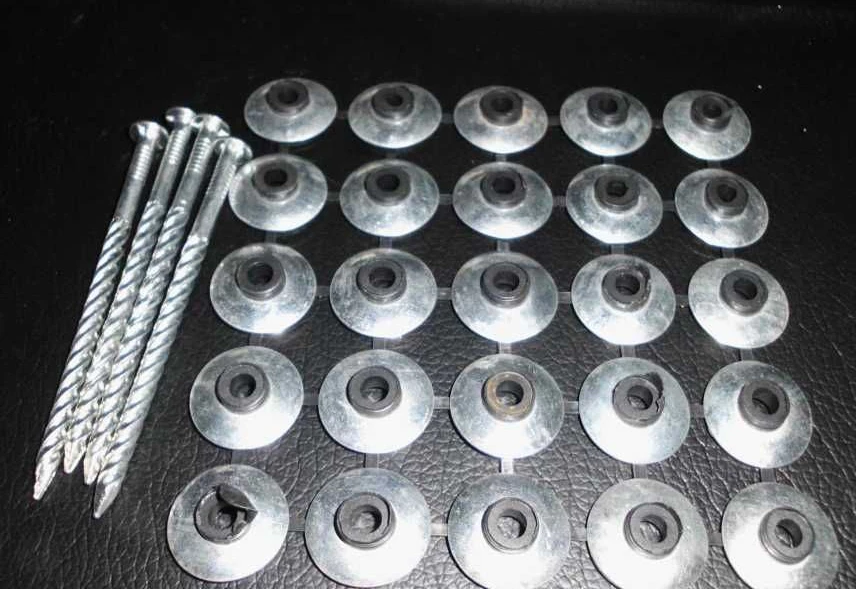
Another point is the nail head design—common styles include clipped and full round heads. The choice depends heavily on what kind of grip you want and what your nailer supports. For example, clipped heads offer slightly better line-of-fire visibility and tend to be lighter, but the round head provides greater holding power, especially under shear stress conditions.
| Spec | Details |
|---|---|
| Length | 1.5" to 3.5" |
| Diameter | 0.092" to 0.131" |
| Material | Galvanized Steel (sometimes stainless for special orders) |
| Collation Angle | 0 degrees (straight aligned) |
| Head Types | Full round or clipped head options |
Vendor Comparison: What to Look For
Over the years, I've worked with a handful of major suppliers. Choosing the right vendor can sometimes save you headaches down the line, whether in quality consistency or availability.
| Vendor | Quality | Price | Delivery Time | Customization |
|---|---|---|---|---|
| YJD Wiremesh | High – Galvanization & durability certified | Competitive | Fast, reliable | Custom lengths, coatings available |
| ABC Nails Co. | Good | Mid-range | Variable | Limited |
| XYZ Fasteners | Moderate | Low | Slow | None |
One of the most memorable projects where these nails shone was a 2019 timber frame complex in Oregon. The crew switched from angled coil nails to 0 degree coil nails and reported a 15% boost in assembly speed. That might not sound huge, but when you're dealing with thousands of nails per day, it adds up fast.
So, why all this fuss over 0 degree coil nails? Because when your structures depend on consistent, strong fastening, minor differences in nail design can ripple through construction timelines, safety, and cost. Oddly enough, it's the kind of detail many overlook until it’s too late.
In real terms, whether you’re a contractor, builder, or supplier, having a reliable source with customizable options and consistent quality is peace of mind. It’s what keeps projects moving without the nagging worry over fastener failures.
I suppose that’s my key takeaway: these nails may be small but they’re mighty—and your choice can impact everything from workflow to final product durability.
Thanks for reading, and may your next project be fastened perfectly.
References:
1. Industry standards on galvanized fasteners (ISO 1461)
2. Construction Fastening Solutions Journal, Vol. 12, 2022
3. Interview notes, Oregon Timber Frame Project, 2019