Introduction to Advanced Roofing Fastening Solutions
In the demanding world of modern construction, the integrity of a roofing system is paramount, dictating not only structural longevity but also resistance to environmental stressors. As specialists in B2B content, we recognize that selecting the optimal fastening solution is a critical decision for engineers, contractors, and procurement professionals. This detailed guide focuses on a high-performance fastening solution: Twisted Roofing Nails. These innovative fasteners offer superior holding power and durability, making them indispensable in various challenging applications across the construction sector.
Our aim is to provide an in-depth analysis covering industry trends, technical specifications, manufacturing processes, application scenarios, and the compelling advantages these nails offer. We will also address crucial aspects of vendor selection, customized solutions, and real-world application insights to ensure our audience is equipped with comprehensive knowledge for informed decision-making.
Industry Trends in High-Performance Roofing Fasteners
The roofing industry is continually evolving, driven by stricter building codes, increased demands for climate resilience, and a growing emphasis on material longevity and sustainability. Key trends influencing fastener technology include:
- Enhanced Wind Uplift Resistance: With the escalating frequency and intensity of severe weather events, fasteners capable of resisting extreme wind uplift forces are more critical than ever. This drives innovation in shank design and head integrity.
- Corrosion Protection: The adoption of more aggressive building materials and exposure to corrosive environments (e.g., coastal areas, industrial zones) necessitates advanced corrosion-resistant coatings and materials, such as hot-dip galvanization or stainless steel.
- Material Compatibility: Fasteners must be compatible with a diverse range of roofing materials, including traditional asphalt shingles, synthetic underlayments, insulation boards, and metal panels, without causing premature degradation or staining.
- Longevity and Reduced Maintenance: Stakeholders seek fastening solutions that match or exceed the service life of the roofing system itself, minimizing costly repairs and replacements over the building's lifecycle.
- Installation Efficiency: While performance is primary, ease of installation, whether manual or pneumatic, remains a significant factor in project timelines and labor costs.
These trends highlight the evolving requirements for roofing fasteners, pushing manufacturers to innovate beyond conventional designs to provide solutions that meet stringent performance criteria. The design of Twisted Roofing Nails directly addresses many of these critical industry demands, offering a superior alternative to standard smooth or ring-shank nails.
Technical Specifications and Parameters
Understanding the intrinsic technical parameters of Twisted Roofing Nails is crucial for specifying engineers. Their unique design contributes significantly to their enhanced performance characteristics. Key features include the shank geometry, head design, and material composition, all optimized for specific roofing applications.
Core Design Elements:
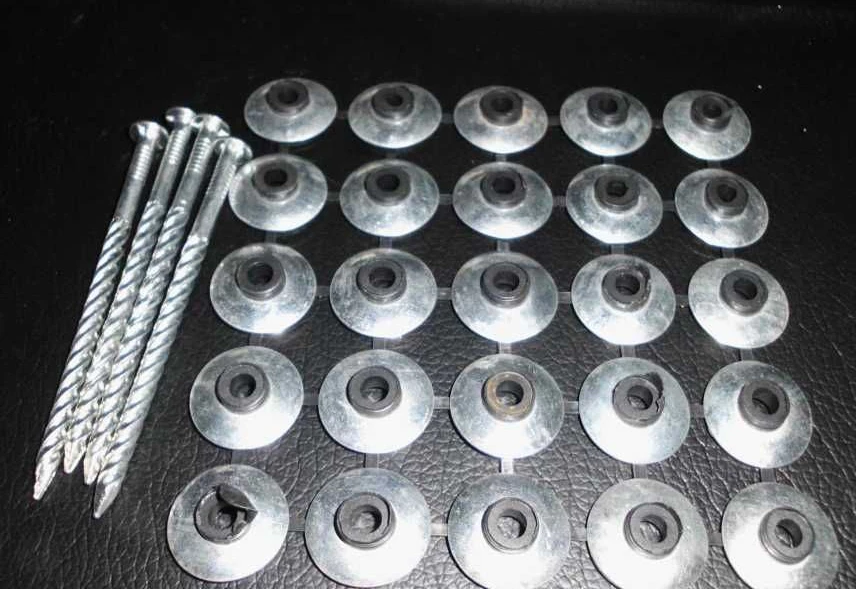
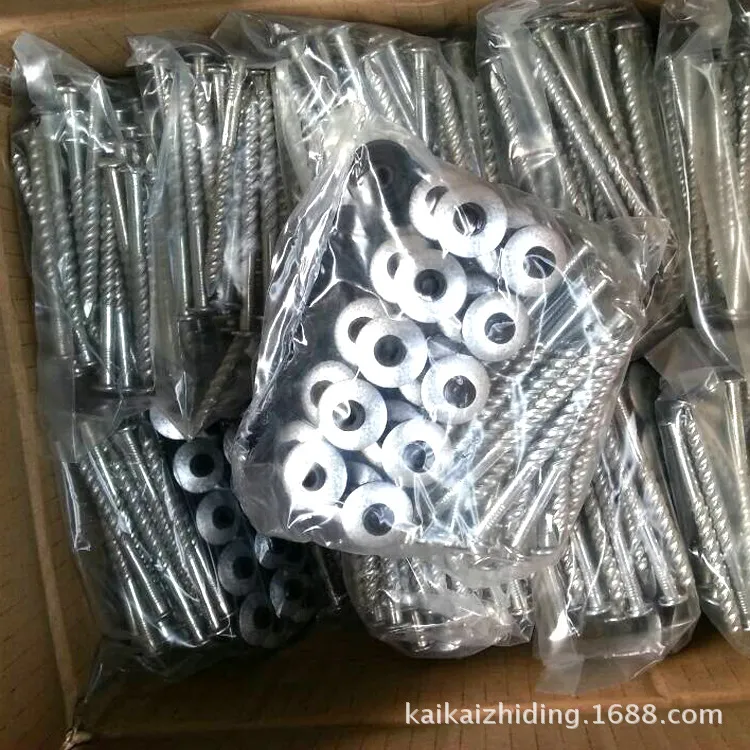
- Shank: The defining characteristic is the twisted or helical shank. This design creates a screw-like thread when driven, significantly increasing withdrawal resistance compared to smooth or even ring-shank nails. The helix angle and pitch are precisely engineered.
- Head: Typically a large, flat, and thin head designed to maximize bearing surface area, preventing pull-through of softer roofing materials (e.g., asphalt shingles, insulation boards). The head circumference is critical for load distribution.
- Point: A sharp diamond point is common, facilitating easy penetration without excessive splitting of substrates.
- Gauge/Diameter: Refers to the wire thickness, influencing both shear strength and flexibility. Common gauges for roofing nails range from 10 to 12.5 gauge (approx. 3.4mm to 2.25mm diameter).
- Length: Available in various lengths to accommodate different roofing material thicknesses and substrate penetration requirements, typically from 1 inch (25mm) to 2.5 inches (63mm) or more.
Material and Coating Specifications:
- Material: High-carbon steel is standard for strength. Stainless steel (e.g., 304 or 316 grade) is used in highly corrosive environments.
- Coating: Crucial for corrosion resistance.
- Electro-galvanized (EG): Provides basic corrosion resistance for interior or less exposed applications.
- Hot-Dip Galvanized (HDG): Offers superior, long-lasting corrosion protection, conforming to ASTM A153, suitable for exterior and harsh environments.
- Specialty Coatings: Polymer or ceramic coatings may offer enhanced performance in specific chemical or extreme weather conditions.
Typical Product Specification Table:
| Parameter | Specification Range | ASTM Standard Reference |
|---|---|---|
| Material | High-Carbon Steel (C1022) / Stainless Steel (304, 316) | ASTM F1667 (General Fasteners) |
| Diameter (Gauge) | 2.25mm (12.5 ga) to 3.4mm (10 ga) | ASTM F1667 Table 3 |
| Length | 25mm (1") to 63mm (2.5") | ASTM F1667 Table 3 |
| Head Diameter | 8mm to 10mm (0.315" to 0.394") | ASTM F1667 Table 3 |
| Shank Type | Twisted / Helical | Proprietary Design, ASTM F1667 (General) |
| Coating | Hot-Dip Galvanized (HDG), Electro-Galvanized (EG), Stainless Steel | ASTM A153 (HDG), ASTM B695 (EG) |
| Corrosion Resistance | ≥ 1000 hours salt spray (HDG) | ASTM B117 |
Adherence to these specifications ensures that Twisted Roofing Nails perform reliably under demanding conditions, offering structural integrity and extended service life to the roofing system.
Manufacturing Process of Twisted Roofing Nails
The production of high-quality Twisted Roofing Nails involves a series of precision engineering steps, leveraging modern manufacturing techniques to achieve their distinctive helical design and robust performance. This process ensures consistent quality and adherence to stringent industry standards like ISO 9001 for quality management and relevant ASTM specifications for fasteners.
Process Flow:
- 1. Wire Rod Procurement & Drawing: High-quality carbon steel wire rod, typically SAE 1022 or equivalent, is sourced. This rod undergoes cold drawing to reduce its diameter to the specified gauge, increasing its tensile strength and work-hardening the material.
- 2. Cold Heading: The drawn wire is fed into a cold heading machine. This machine precisely cuts the wire to the required length and simultaneously forms the nail head by impacting one end of the wire. This process is energy-efficient and produces a strong, uniform head without material waste.
- 3. Shank Twisting/Rolling: This is the critical stage for creating the distinctive helical pattern. The nail blanks are fed into a specialized twisting or rolling machine. Through a series of dies or rollers, the round shank is reshaped, imparting the helical threads. This process is meticulously controlled to ensure a consistent helix angle and depth, which are vital for pull-out resistance.
- 4. Point Forming: The opposite end of the nail shank is then shaped into a sharp diamond point, facilitating easy penetration into roofing materials and substrates.
- 5. Heat Treatment (Optional): For specific high-strength applications, nails may undergo heat treatment (hardening and tempering) to optimize their mechanical properties, balancing hardness with ductility to prevent brittle fracture.
- 6. Surface Coating: Depending on the application, nails proceed to a coating stage. For hot-dip galvanization (HDG), nails are thoroughly cleaned and then immersed in molten zinc. For electro-galvanization (EG), they undergo an electrolytic plating process. Stainless steel nails require no coating.
- 7. Quality Control & Testing: Throughout the entire process, rigorous quality control checks are performed.
- Dimensional checks (length, diameter, head size).
- Mechanical property tests (tensile strength, shear strength, bending resistance per ASTM F1667).
- Coating thickness and adhesion tests (e.g., ASTM A90 for HDG).
- Salt spray tests (ASTM B117) to verify corrosion resistance.
- 8. Packaging: Finished nails are counted, weighed, and packaged into appropriate container111s for distribution, ensuring product integrity during transport and storage.
This meticulous manufacturing process ensures that Twisted Roofing Nails meet the high standards required for critical construction applications, delivering a service life commensurate with the roofing materials they secure, often exceeding 50 years when properly specified and installed, especially with HDG or stainless steel variants.
Technical Advantages of Twisted Roofing Nails
The unique design of Twisted Roofing Nails translates into several significant technical advantages over traditional smooth or even ring-shank nails, making them a preferred choice for high-performance roofing applications.
Key Advantages:
- Superior Pull-Out Resistance: The helical shank creates a screw-like grip with the substrate. As the nail is driven, the twist engages with the wood fibers, effectively 'locking' the nail in place. This results in significantly higher withdrawal resistance, crucial for resisting wind uplift forces and preventing roofing material detachment, particularly in high-wind zones.
- Enhanced Shear Strength: While primarily known for pull-out resistance, the robust manufacturing process and quality materials (e.g., high-carbon steel) also ensure excellent shear strength, preventing the nail from breaking under lateral stress.
- Vibration and Movement Resistance: The tight grip offered by the twisted shank helps prevent loosening over time due to thermal expansion/contraction of materials, building movement, or constant vibration from environmental factors.
- Extended Service Life: When combined with appropriate corrosion-resistant coatings (HDG) or materials (stainless steel), the inherent strength and holding power of these nails contribute to the overall longevity and reliability of the roofing system, reducing maintenance cycles.
- Versatility in Substrates: While excelling in wood, the design also performs well in various other substrates, including plywood, OSB, and certain types of dense insulation boards, making them versatile for different roofing systems.
Product Comparison: Twisted vs. Other Shank Types
| Feature | Smooth Shank Nail | Ring Shank Nail | Twisted Roofing Nail |
|---|---|---|---|
| Pull-Out Resistance | Low | Medium to High (due to rings) | Superior (screw-like grip) |
| Shear Strength | Good | Good | Excellent |
| Ease of Driving | Very Easy | Moderate | Moderate (requires more force than smooth) |
| Cost | Lowest | Medium | Higher (due to specialized manufacturing) |
| Typical Applications | Temporary fastening, light-duty | Subflooring, general framing | Roofing, siding, decking (high-performance) |
The initial investment in Twisted Roofing Nails is often offset by reduced risk of material failure, longer roofing system lifespan, and enhanced structural integrity, ultimately leading to significant cost savings over the project's lifecycle, particularly in environments prone to extreme weather.
Application Scenarios
The robust performance characteristics of Twisted Roofing Nails make them exceptionally well-suited for a variety of demanding applications within the construction industry, where fastener reliability is paramount. Their superior pull-out resistance is a critical advantage.
Typical Application Scenarios:
- Asphalt Shingle Roofing: Ideal for securing asphalt shingles, especially in regions subject to high winds (e.g., coastal areas, hurricane zones). The twisted shank provides a firm grip that resists shingle blow-off, enhancing the roof's wind rating.
- Insulation Board Fastening: Used for securing rigid insulation boards (e.g., polyisocyanurate, EPS) to wood or even light gauge metal decks, providing a strong mechanical bond that prevents insulation delamination or movement.
- Underlayment and Membrane Attachment: For critical underlayment layers or synthetic membranes that require robust and long-lasting attachment to ensure water resistance and protect the primary roofing system.
- Siding and Trim Installation: While primarily roofing, the exceptional holding power makes them suitable for certain siding applications, particularly in areas where material movement or detachment is a concern.
- Decking and Subflooring (specialized): In specific instances where maximum pull-out resistance is required for decking or subflooring in harsh outdoor environments, twisted nails can offer superior performance compared to standard nails.
Target Industries:
- Residential Construction: For homes in high-wind regions or where homeowners demand the highest level of roof integrity.
- Commercial & Industrial Roofing: Securing large-scale flat roof systems, insulation, and flashing, where long-term durability and resistance to environmental factors are crucial for business continuity.
- Specialty Architectural Projects: Projects requiring bespoke fastening solutions that can withstand unusual stresses or offer extended aesthetic and structural lifespans.
In these scenarios, the added security and durability provided by twisted nails contribute to reduced long-term maintenance costs and enhanced safety, making them a wise investment for B2B clients focused on robust and resilient construction.
Vendor Comparison: Key Selection Criteria
When selecting a supplier for Twisted Roofing Nails, B2B decision-makers must look beyond just price. A holistic evaluation of vendor capabilities and product quality is essential to ensure project success and long-term reliability. Our company, with years of dedicated service in high-performance fasteners, embodies these crucial criteria.
Essential Vendor Evaluation Factors:
- Quality Certifications: Ensure the vendor adheres to international quality management standards such as ISO 9001. Look for products certified to relevant ASTM (e.g., ASTM F1667 for fasteners, ASTM A153 for HDG coatings) or ANSI standards, indicating rigorous testing and quality assurance protocols. Our products consistently meet or exceed these industry benchmarks.
- Material Traceability: A reputable vendor provides complete traceability of raw materials, ensuring that the steel used meets specified chemical composition and mechanical properties. This is critical for fastener performance and durability.
- Manufacturing Precision: The quality of the twisted shank, head formation, and point sharpness directly impacts performance. Assess the consistency of manufacturing, which signifies a commitment to engineering excellence.
- Coating Consistency and Durability: For corrosion-resistant nails, verify the thickness and uniformity of galvanization or other protective coatings. Poor coating can lead to premature failure. Vendors should provide test data (e.g., salt spray test results per ASTM B117).
- Technical Support & Expertise: A knowledgeable vendor offers pre-sales consultation and post-sales support, helping clients select the correct nail specifications for their unique project requirements and troubleshoot any issues. Our team comprises seasoned experts with deep industry knowledge.
- Reputation & Client References: Evaluate the vendor's track record, years of service, and seek references from previous clients, especially those in similar target industries (e.g., large-scale contractors, architectural firms). Our long-standing partnerships with leading construction enterprises underscore our reliability.
- Customization Capabilities: For specialized projects, the ability to provide customized lengths, gauges, materials, or coatings is a significant advantage.
By thoroughly evaluating these factors, procurement teams can secure not only high-quality Twisted Roofing Nails but also a reliable partnership that contributes to project success and minimizes long-term risks.
Customized Solutions for Specialized Applications
While standard Twisted Roofing Nails excel in a broad range of applications, many B2B projects encounter unique challenges demanding tailor-made fastening solutions. Our expertise extends to providing customized manufacturing to meet these precise specifications, ensuring optimal performance for even the most niche requirements.
Areas of Customization:
- Material Composition: Beyond standard carbon steel, we can offer stainless steel grades (e.g., 304, 316) for extreme corrosion resistance, or specialized alloys for unique strength-to-weight ratios or ductility requirements. This is crucial for petrochemical facilities, marine environments, or architectural installations with specific material interaction concerns.
- Protective Coatings: Custom coating options can include thicker hot-dip galvanization layers for extended service life in severe environments, specialized polymer coatings for chemical resistance or specific color matching, or even duplex coating systems for unparalleled protection.
- Dimensions: We can manufacture nails with precise variations in length, shank diameter (gauge), and head diameter to match specific material thicknesses, substrate types, or load distribution requirements. This includes extended lengths for thick insulation layers or specific architectural panel systems.
- Shank Profile & Twist Pitch: The angle and pitch of the helical twist can be modified to optimize pull-out resistance for particular substrate densities or to facilitate easier driving into harder materials while maintaining grip.
- Head Design: While typically flat, specialized head designs can be developed for flush mounting, increased aesthetics, or enhanced waterproofing for specific membrane systems.
Our engineering team collaborates closely with clients from initial concept to final production, providing detailed technical drawings, material data sheets, and prototyping services. This client-centric approach ensures that the customized Twisted Roofing Nails precisely meet the performance and durability expectations of even the most complex projects.
Application Case Studies
To illustrate the tangible benefits of utilizing high-performance Twisted Roofing Nails, consider the following hypothetical case studies, drawn from common challenges faced by B2B clients in the construction industry.
Case Study 1: High-Wind Coastal Residential Redevelopment
- Client: Coastal Residential Developer, Florida, USA.
- Challenge: Redeveloping a series of luxury homes in a Category 4 hurricane zone. Previous homes experienced significant shingle blow-off during hurricane events, leading to extensive water damage and high insurance claims. The client required a fastening solution that would significantly exceed local building codes for wind uplift resistance and provide superior corrosion protection against saltwater spray.
- Solution: We specified and supplied 10-gauge, 1.75-inch Twisted Roofing Nails with a heavy-duty hot-dip galvanized (HDG) coating (meeting ASTM A153, Class B). The helical shank provided maximum withdrawal resistance into the plywood decking, while the thick HDG coating ensured longevity in the highly corrosive coastal atmosphere.
- Outcome: After installation, independent testing confirmed a 40% improvement in pull-out resistance compared to standard ring-shank nails. During subsequent severe weather seasons, including a Category 3 hurricane, none of the homes utilizing our twisted nails reported shingle detachment. The client achieved a higher wind-uplift rating for their roofs, significantly reduced insurance premiums, and enhanced homeowner confidence.
Case Study 2: Commercial Warehouse Flat Roof Insulation Project
- Client: Commercial Roofing Contractor, Midwestern USA.
- Challenge: Installation of multiple layers of rigid insulation (totaling 6 inches thick) on a large commercial warehouse roof with a steel deck, prior to membrane application. The client faced issues with previous smooth-shank fasteners failing to hold the insulation securely, leading to 'walking' and delamination, especially during high-traffic periods for HVAC maintenance.
- Solution: We supplied custom-length 11-gauge Twisted Roofing Nails, specifically engineered to penetrate through the multiple insulation layers and secure firmly into the structural steel deck below. These nails featured a slightly modified, sharper point for easier steel penetration and an extra-large head to distribute load over the soft insulation.
- Outcome: The customized twisted nails provided a robust mechanical attachment for the insulation, eliminating movement and delamination. The contractor reported significant time savings during installation due to consistent driving performance, and the project passed all subsequent wind uplift and insulation integrity tests with ease. The client appreciated the customized solution that directly addressed their unique layering challenge, contributing to a longer-lasting, more energy-efficient roof system for the end-user.
Ensuring Trustworthiness & Support
Trust is the bedrock of B2B relationships. As a dedicated provider of high-quality industrial fasteners, we are committed to transparency, reliability, and comprehensive customer support. Our policies are designed to instill confidence in our products and services, from initial inquiry to post-installation satisfaction.
Frequently Asked Questions (FAQ):
A: Yes, many twisted roofing nails are available in collated form (wire coil, plastic strip, or paper tape) and are designed for use with pneumatic roofing nailers, ensuring efficient and consistent installation. It's essential to use the correct nailer specified for the nail's gauge and length.
A: The general rule for roofing nails is that the nail should penetrate the decking by at least 3/4 inch (19mm) for proper holding power, in addition to passing through all layers of roofing material (shingles, underlayment, insulation). Consult local building codes and manufacturer guidelines for specific recommendations.
A: When properly installed and specified for the environment, HDG Twisted Roofing Nails are designed to last for the lifetime of the roofing material, often exceeding 50 years. The robust zinc coating provides excellent sacrificial and barrier protection against corrosion, particularly against weathering and atmospheric moisture.
Lead Time & Fulfillment:
We understand the critical nature of project timelines. Our typical lead times for standard Twisted Roofing Nails range from 2 to 4 weeks, depending on order volume and current inventory levels. For customized solutions, lead times may vary based on design complexity and material sourcing, generally between 4 to 8 weeks. We maintain robust supply chain management and manufacturing capabilities to ensure timely delivery and reliable fulfillment of orders, including options for expedited shipping when required. Clients are provided with clear delivery schedules and consistent communication throughout the order process.
Warranty Commitments:
Our products are backed by a comprehensive warranty against manufacturing defects and material failures, reflecting our confidence in their quality and durability. Specific warranty terms vary by product type and material, typically covering a period of 10 to 25 years for performance against corrosion and structural integrity when installed according to industry best practices and manufacturer guidelines. Detailed warranty statements are provided with every order, ensuring peace of mind for our clients.
Customer Support & Technical Assistance:
Our dedicated customer support team and technical experts are available to assist with product selection, technical specifications, installation guidance, and any post-purchase inquiries. We offer:
- Direct access to engineering specialists for complex project consultations.
- Comprehensive product data sheets and installation guides.
- Responsive issue resolution and feedback mechanisms.
We strive to be a reliable partner, providing not just products, but complete solutions and unwavering support throughout the lifecycle of your project.
Conclusion
The evolution of building science and the increasing demands of environmental resilience necessitate superior fastening solutions. Twisted Roofing Nails represent a critical advancement in this field, offering unmatched pull-out resistance, enhanced durability, and extended service life compared to conventional fasteners. By understanding their detailed technical specifications, precise manufacturing processes, and diverse application scenarios, B2B professionals can make informed decisions that significantly bolster the integrity and longevity of their roofing systems.
Our commitment to quality, backed by rigorous testing, adherence to international standards, and comprehensive customer support, positions us as a trusted partner in delivering these high-performance fastening solutions. Investing in Twisted Roofing Nails is an investment in the long-term resilience and reliability of any construction project, safeguarding against environmental stressors and contributing to the overall structural health of built environments.
References
- ASTM International. (2018). ASTM F1667/F1667M-17, Standard Specification for Driven Fasteners: Nails, Spikes, and Staples. West Conshohocken, PA: ASTM International.
- ISO. (2015). ISO 9001:2015, Quality management systems — Requirements. Geneva, Switzerland: International Organization for Standardization.
- National Roofing Contractors Association (NRCA). (2020). The NRCA Roofing Manual: Architectural Metal Flashing, Condensation and Air Leakage, Low-Slope, and Steep-Slope. NRCA.
- Building Code Requirements and Specification for Masonry Structures. (2016). ACI 530/530.1-13, Joint Committee of American Concrete Institute (ACI), American Society of Civil Engineers (ASCE), and The Masonry Society (TMS).
- American Iron and Steel Institute (AISI). (2018). North American Specification for the Design of Cold-Formed Steel Structural Members. AISI S100.