Drywall screws: field notes from the jobsite and the factory floor
If you spend enough weekends on sites (guilty), you learn quickly that the humble drywall screw is the tiny component that can make or break a schedule. From Hebei’s Shenze production base to hotel corridors in Chicago, the story is the same: a good fastener bites fast, minimizes surface damage, and doesn’t cam-out when you’re tired at 5 p.m. In fact, many customers tell me these fasteners do much less damage to wood, are easier to remove, and can even be reused—so they’re replacing traditional wood screws in a surprising number of applications.

What’s inside a high-performing drywall screw
Origin: Building Material Production Base, Shenze, Shijiazhuang, Hebei, China—an ecosystem that’s quietly world-class at wire drawing and surface finishing. Typical build: case-hardened carbon steel (SAE 1018–1022), bugle head, Phillips recess, coarse thread for wood studs and fine thread/self-drilling for metal frames. Coatings? Black phosphate for mud adhesion, zinc for general interiors, and upgraded ceramic for coastal jobs.
| Spec | Typical Value (≈ / real-world use may vary) |
|---|---|
| Diameter | #6–#8 (≈3.5–4.2 mm) |
| Length | 25–75 mm common; custom to 125 mm |
| Head/Drive | Bugle head, PH2; options: square/Torx |
| Hardness | Case 52–58 HRC; core ≈22–28 HRC |
| Coating | Black phosphate, zinc (5–8 µm), ceramic |
| Salt Spray (ISO 9227) | Phosphate ≈24–48 h; Zn ≈72–120 h; Ceramic 500–1000 h |
| Standards | ASTM C1002, EN 14566, ISO 4042 (plating) |
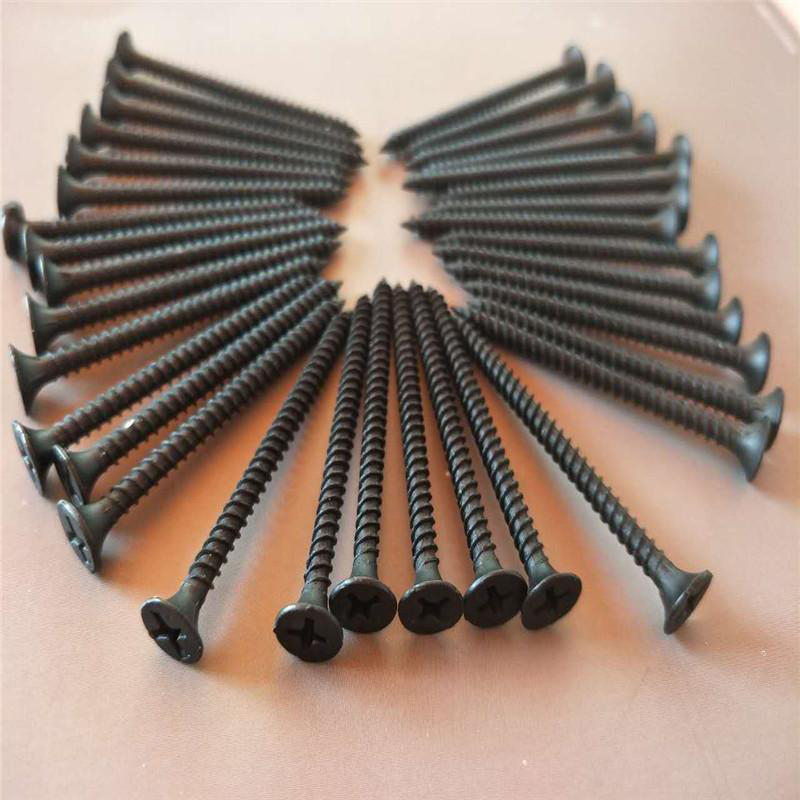
Process flow (how your drywall screws are made)
Materials: low-carbon steel wire rod → wire drawing → cold heading (bugle head) → thread rolling → point forming (sharp or TEK) → heat treatment (carburize + temper) → coating (phosphate per ISO 9717 or zinc per ISO 4042; hydrogen embrittlement relief bake) → 100% visual + sampling tests. Testing: torsional strength (ASTM C1002), pull-out in gypsum over wood/steel, coating thickness, salt spray (ISO 9227), drive recess fit. Expected service life: interior, dry service ≈15–25 years; humid/coastal: specify ceramic or stainless alternatives.
Where they excel
Applications: gypsum board to wood studs (coarse), gypsum to light-gauge steel (fine or self-drilling), cement board, light metal accessories, and—surprisingly—cabinet carcasses where a drywall screw does less surface damage. Industries: residential, hospitality, healthcare fit-outs, prefab and modular.
Advantages: fast bite, lower crush due to bugle head, easier removal, cost-effective, widely available bits and collated strips for autofeed drivers (trend: more collated and higher-corrosion coatings in 2025).
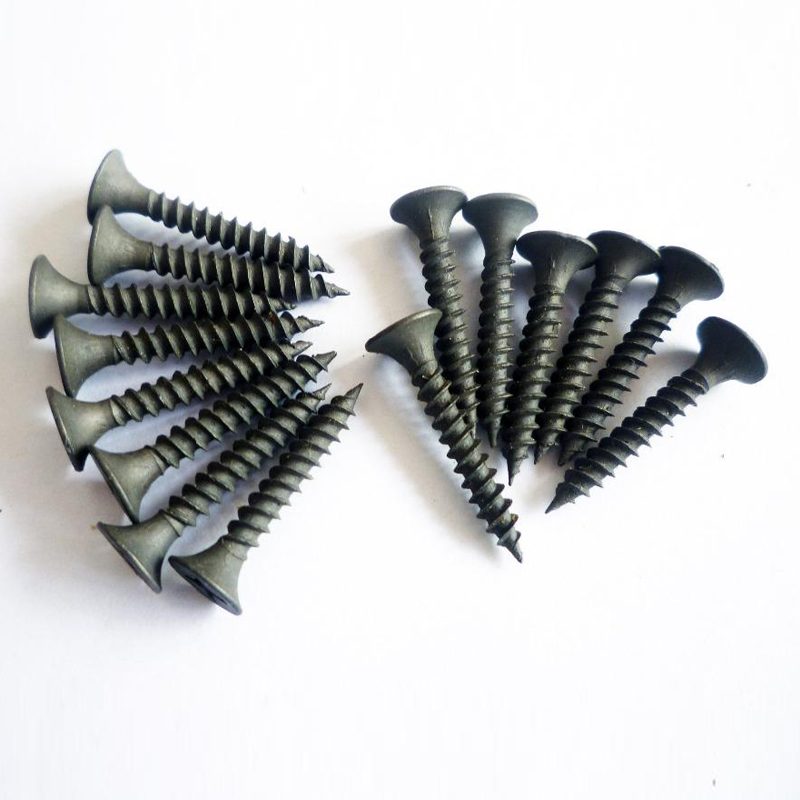
Vendor snapshot (real-world buying factors)
| Vendor | Origin | Certs | MOQ | Lead Time | Coatings | Notes |
|---|---|---|---|---|---|---|
| YJD Wire Mesh | Shenze, Hebei, CN | EN 14566, ISO 9001 | ≈100–200k pcs | 10–20 days | Phosphate/Zn/Ceramic | Strong value; flexible sizes |
| Domestic Brand B | Local | ASTM C1002 | ≈20k pcs | 3–7 days | Phosphate/Zn | Fast delivery; higher price |
| EU Import C | EU | CE, EN 14566 | ≈50k pcs | 3–5 weeks | Ceramic/Ruspert | Premium corrosion; $$$ |
Customization and compliance
Options: head (bugle/wafer), drive (PH2, SQ2, Torx), thread (coarse/fine), self-drilling TEK #2, point types, collated strips. Coatings per ISO 4042 and RoHS/REACH compliant. Batch CoCs, salt-spray reports, and dimension checks supplied on request.
Quick case study
A mid-rise hotel renovation specified 72 h salt-spray and low cam-out. Swapping to fine-thread drywall screws with tighter recess tolerances cut bit slips by ≈35% (site logs) and reduced patching around heads. Minor tweak, big savings.
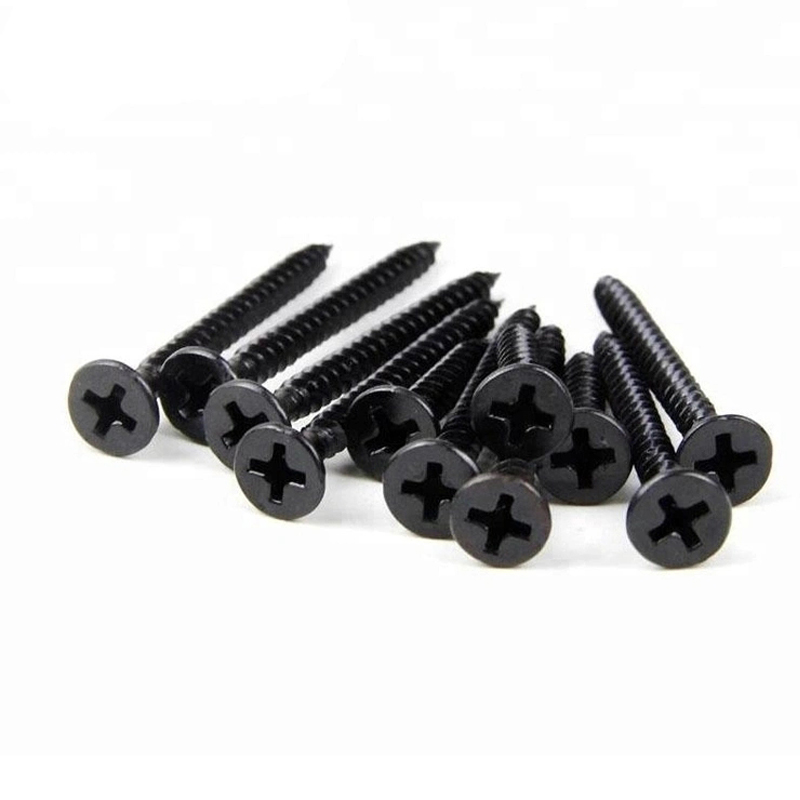
What pros are asking in 2025
Trends: more collated drywall screws for autofeed guns, upgraded anti-corrosion systems, and better QC around hydrogen embrittlement on zinc-plated parts. Sustainable move: lower-VOC phosphates and EPDs where available. Honestly, it’s the quiet evolution that keeps crews on track.
Citations
- ASTM C1002 — Steel Self-Piercing Tapping Screws for Gypsum Panel Products (ASTM International).
- EN 14566 — Mechanical fasteners for gypsum plasterboard systems (CEN).
- ISO 4042 — Fasteners—Electroplated coatings (ISO).
- ISO 9227 — Corrosion tests in artificial atmospheres—Salt spray tests (ISO).
- GA-216 — Application and Finishing of Gypsum Panel Products (Gypsum Association).