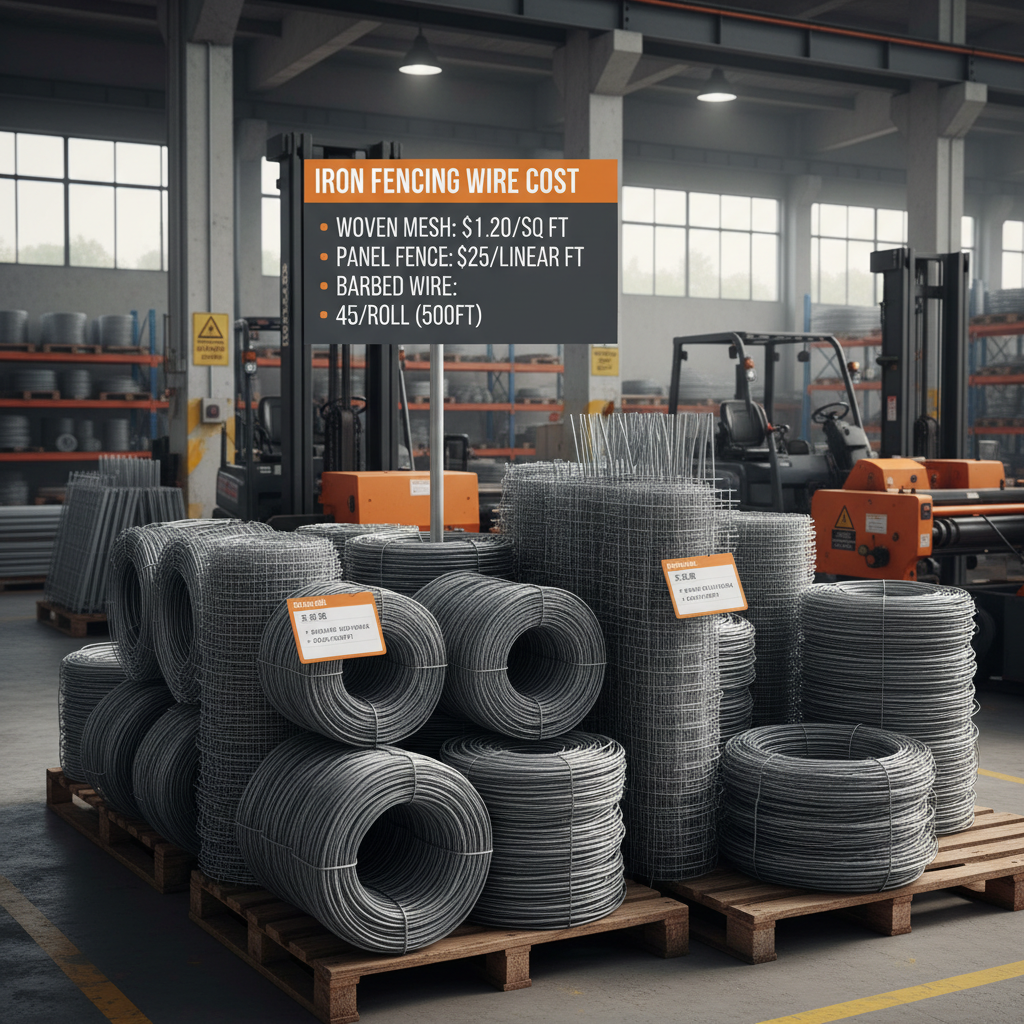
In the complex landscape of industrial metallurgy, 18 gauge iron wire stands as a pivotal component that bridges the gap between structural rigidity and workable flexibility. This specific thickness is widely sought after in the manufacturing of animal cages, wire mesh products, and various fastening systems due to its optimal balance of tensile strength and ease of manipulation. Understanding the nuances of this material is essential for procurement managers and engineers who aim to optimize production costs without compromising the integrity of their end products.
Globally, the demand for standardized wire products is driven by the expansion of agricultural infrastructure and urban construction. The use of 18 gauge iron wire is not merely a technical choice but a strategic one, influencing the durability of fencing and the safety of animal containment systems. As industries shift toward more sustainable and precise manufacturing, the role of standardized gauge iron wire becomes even more critical in ensuring interoperability across international supply chains.
However, sourcing high-quality iron wire often presents challenges, ranging from inconsistent zinc coating thickness to variations in carbon content that can lead to premature brittleness. By diving deep into the technical specifications and practical applications of 18 gauge iron wire, businesses can avoid common pitfalls and implement solutions that enhance the longevity and performance of their industrial installations.
Global Industry Context of 18 Gauge Iron Wire
On a global scale, the production of 18 gauge iron wire is intricately linked to the growth of the global construction and agricultural sectors. According to industrial trends observed in ISO-compliant manufacturing hubs, the consistency of wire gauge is paramount for the automated production of wire mesh and barbed wire series. When the gauge fluctuates even slightly, it can lead to catastrophic failures in automated weaving machines, resulting in significant downtime and material waste.
The challenge facing many emerging markets is the reliance on non-standardized wire, which often fails to meet the rigorous demands of modern infrastructure. By adopting the precise specifications of 18 gauge iron wire, manufacturers can ensure that their products—whether they be animal cages or window screenings—meet international safety and durability standards, thereby opening doors to export markets in Europe and North America.
Technical Definition and Standards of 18 Gauge Iron Wire
In simple technical terms, 18 gauge iron wire refers to a specific diameter of wire produced through the process of drawing iron rods through a series of dies. While "gauge" can vary slightly between the Standard Wire Gauge (SWG) and the American Wire Gauge (AWG), in the context of metal products, it typically denotes a wire with a diameter that offers a balanced ratio of flexibility to strength, making it ideal for twisting and weaving.
This standardization is crucial for the "Iron Wire Series" and "Wire Mesh Products" categories. When a client requests 18 gauge, they are looking for a material that can withstand a specific amount of tension without snapping, yet remains pliable enough to be bent into the intricate shapes required for animal cage fabrication. This balance is achieved through precise control of the drawing process and the chemical composition of the iron.
Moreover, the connection between 18 gauge iron wire and humanitarian needs often manifests in the rapid deployment of temporary shelters or livestock enclosures in disaster-stricken areas. The ability to transport lightweight yet sturdy wire allows NGOs and governments to establish secure boundaries and protective structures quickly, demonstrating that a simple industrial parameter has profound real-world implications.
Core Components and Material Factors
The performance of 18 gauge iron wire is primarily governed by its tensile strength. This factor determines how much load the wire can carry before permanent deformation occurs, which is critical for products like barbed wire and high-tension fencing where structural integrity is non-negotiable.
Corrosion resistance is another vital component. Since iron is naturally prone to oxidation, 18 gauge iron wire is frequently treated with galvanization—a process of coating the iron with a layer of zinc. This not only extends the lifespan of the wire in humid or coastal environments but also ensures that the structural integrity of the wire mesh remains intact over decades of exposure.
Lastly, the ductility of 18 gauge iron wire allows for seamless integration into complex assemblies. Whether it is being used in the production of iron nails or as a supporting element in window screening, the material's ability to undergo plastic deformation without fracturing is what makes it a favorite among front-end fabricators.
Practical Applications and Global Use Cases
The application of 18 gauge iron wire spans across diverse industries. In the agricultural sector, it is the backbone of the "Animal Cage Series," where it provides the necessary containment strength while remaining lightweight enough for easy transport. In urban environments, it is frequently utilized in window screening and security partitions, providing a discreet yet effective barrier against intrusions.
In remote industrial zones, such as mining sites in South America or infrastructure projects in Southeast Asia, this wire is often used for temporary reinforcement and bundling. Its versatility allows it to be used in post-disaster relief operations to create makeshift livestock pens, ensuring that food security is maintained by protecting animals from predators in unstable environments.
Comparative Performance of 18 Gauge Iron Wire Variants
Long-Term Value and Economic Advantages
Investing in high-grade 18 gauge iron wire offers significant tangible benefits, primarily in the form of reduced maintenance costs. By utilizing wires with consistent gauge and superior coating, the frequency of replacement for fences and cages is drastically lowered, providing a higher return on investment (ROI) over the product's lifecycle.
Beyond the logic of cost, there is an emotional angle of trust and safety. For a farmer, a sturdy cage made from reliable 18 gauge iron wire means the security of their livestock; for a homeowner, it means the peace of mind that their window screenings are durable. This reliability fosters a sense of stability and innovation, allowing designers to push the boundaries of what is possible in wire-based architecture.
Future Trends in Iron Wire Manufacturing
The future of 18 gauge iron wire is being reshaped by the drive toward "Green Steel" and sustainable metallurgy. We are seeing a shift toward electric arc furnaces (EAF) and hydrogen-based reduction processes to lower the carbon footprint of iron production. This ensures that the wire used in the "Barbed Wire Series" is not only strong but also environmentally responsible.
Digital transformation is also playing a role, with AI-driven quality control systems now capable of detecting gauge deviations in real-time during the drawing process. This automation ensures that every meter of 18 gauge iron wire produced meets a strict tolerance level, eliminating the human error that previously led to defective batches.
Furthermore, the integration of nano-coatings is emerging as a trend to replace traditional galvanization. These advanced coatings provide superior hydrophobic properties and corrosion resistance, potentially extending the life of 18 gauge iron wire in extreme saline environments, such as offshore platforms or coastal animal shelters.
Challenges and Expert Solutions in Implementation
One of the primary challenges in using 18 gauge iron wire is the risk of "hydrogen embrittlement," where the metal becomes brittle and cracks under stress. This often occurs during improper pickling or galvanizing processes. Expert insight suggests implementing a controlled annealing phase to relieve internal stresses within the wire, restoring its ductility.
Another common limitation is the inconsistency in coating thickness across large spools. To overcome this, manufacturers are adopting "continuous hot-dip galvanizing" lines that ensure a uniform zinc layer. This solution prevents localized corrosion "hotspots" that typically lead to the premature failure of wire mesh products.
Finally, logistics and storage can lead to surface scratches that compromise the protective layer. The professional approach is to implement vacuum-sealed packaging or reinforced wooden spools that prevent the 18 gauge iron wire from rubbing against itself during transit, ensuring the product arrives at the factory in pristine condition.
Comparison Analysis of 18 Gauge Iron Wire Specifications and Performance
| Wire Treatment |
Tensile Strength (MPa) |
Corrosion Resistance |
Primary Application |
| Hot-Dip Galvanized |
450 - 600 |
Very High |
Outdoor Fencing |
| Electro-Galvanized |
400 - 550 |
Medium |
Indoor Cages |
| Soft Annealed |
250 - 350 |
Low |
Tying/Binding |
| PVC Coated |
420 - 580 |
Excellent |
Decorative Mesh |
| Black Iron |
380 - 500 |
Very Low |
Construction Nails |
| Stainless Hybrid |
600 - 800 |
Maximum |
Medical Screens |
FAQS
Depending on the standard used (AWG vs SWG), 18 gauge iron wire typically falls around 1.0mm to 1.2mm. It is essential to confirm the specific standard with your supplier to ensure the wire fits your machinery or design specifications, as a small difference in diameter can affect the tension and fit of wire mesh products.
Yes, 18 gauge iron wire provides an excellent balance of strength and weight for most medium-sized animal cages. While it may not be suitable for extremely large predatory animals, its tensile strength is more than sufficient for poultry, rabbits, and small pets, especially when welded into a mesh structure that distributes the load.
The most effective way to prevent rust is to choose galvanized 18 gauge iron wire, which is coated in zinc. For extreme environments, PVC-coated options provide an additional plastic barrier. If you are using black iron wire, applying a professional-grade anti-corrosive paint or oil-based sealant can help slow down the oxidation process.
Absolutely. Due to its flexibility and reasonable strength, 18 gauge iron wire is often used in security screenings. It is thick enough to deter intruders and pests but thin enough to allow air and light to pass through. We recommend galvanized or stainless versions for window applications to prevent unsightly rust streaks on the walls.
Annealed 18 gauge iron wire has been heat-treated to make it softer and more flexible, which is ideal for tying, binding, or manual bending. Hard wire is not annealed and possesses higher tensile strength, making it better for structural applications like fences or cages where the wire must resist bending under pressure.
To maintain quality, store your wire in a dry, covered area to avoid moisture. Ensure that spools are kept on pallets to prevent direct contact with concrete floors, which can draw moisture and cause bottom-up corrosion. Additionally, avoid stacking spools too high to prevent the wire from flattening or kinking under excessive weight.
Conclusion
In summary, 18 gauge iron wire is far more than a simple industrial commodity; it is a versatile engineering solution that underpins critical sectors from agriculture to urban security. By prioritizing the correct gauge, selecting the appropriate surface treatment (such as hot-dip galvanization), and understanding the balance between tensile strength and ductility, manufacturers can create products that are durable, safe, and cost-effective. The integration of modern automation and sustainable metallurgy only further enhances the value proposition of this essential material.
Looking ahead, the industry must continue to embrace green manufacturing and precision quality control to meet the evolving demands of the global market. Whether you are developing the next generation of animal containment systems or enhancing building security, the choice of high-quality 18 gauge iron wire will be the deciding factor in your product's longevity. We invite you to explore our full range of specialized wire products to find the perfect fit for your next project. Visit our website: www.yjdwiremesh.com