Soft iron wire, a versatile material renowned for its malleability and magnetic properties, plays a crucial role in numerous industries worldwide. From electrical components and fencing to artistic applications and structural support, its unique characteristics make it an indispensable element in modern manufacturing and infrastructure. Understanding its properties and applications is key to innovation and efficiency across diverse sectors.
The global demand for soft iron wire is steadily increasing, driven by expanding infrastructure projects, advancements in electrical engineering, and a growing need for reliable and cost-effective materials. According to the World Steel Association, global steel production continues to climb, indicating a consistent demand for its essential component – iron. This demand highlights the importance of sustainable sourcing and efficient production methods for soft iron wire.
Addressing challenges like corrosion and maintaining consistent quality is paramount. Soft iron wire provides a foundation for countless applications, offering a balance of strength, flexibility, and affordability. Its enduring relevance underscores the need for continuous improvement in its production and utilization.
Introduction to Soft Iron Wire
Soft iron wire, distinct from its harder counterparts, is an iron alloy with a low carbon content – typically less than 0.08%. This low carbon level results in a material that's exceptionally ductile, meaning it can be easily drawn into wires without breaking. This property is fundamental to its widespread use. soft iron wire is particularly valued for its high permeability, making it ideal for applications requiring strong magnetic fields.
The applications of soft iron wire span a vast spectrum. From crafting intricate wire sculptures to serving as a critical component in transformers and electric motors, its versatility is unmatched. Furthermore, its relatively low cost compared to other specialized metals makes it a practical choice for many large-scale industrial projects and everyday uses.
Defining Soft Iron Wire
Simply put, soft iron wire is a ferrous material characterized by its ease of manipulation and its strong magnetic properties. Unlike steel, which contains a higher carbon content and is considerably harder, soft iron readily yields to bending, twisting, and drawing processes. This characteristic makes it incredibly adaptable for various fabrication techniques.
Its connection to modern industry is undeniable. Soft iron wire is a cornerstone of electrical engineering, enabling the creation of efficient electromagnets and transformers. It’s also vital in manufacturing processes like wire drawing, where its malleability allows for the production of fine, consistent wires. Beyond industry, its use in construction, art, and even medical devices highlights its broad appeal.
The humanitarian need for readily available materials plays a role too. In emergency situations, soft iron wire can be utilized for temporary repairs, securing shelters, or creating basic tools, demonstrating its resilience and practical value in challenging circumstances.
Core Properties of Soft Iron Wire
One of the most defining characteristics of soft iron wire is its exceptional ductility. This allows it to be formed into a multitude of shapes with minimal effort, making it ideal for complex designs and intricate applications. Its low carbon content directly contributes to this flexibility.
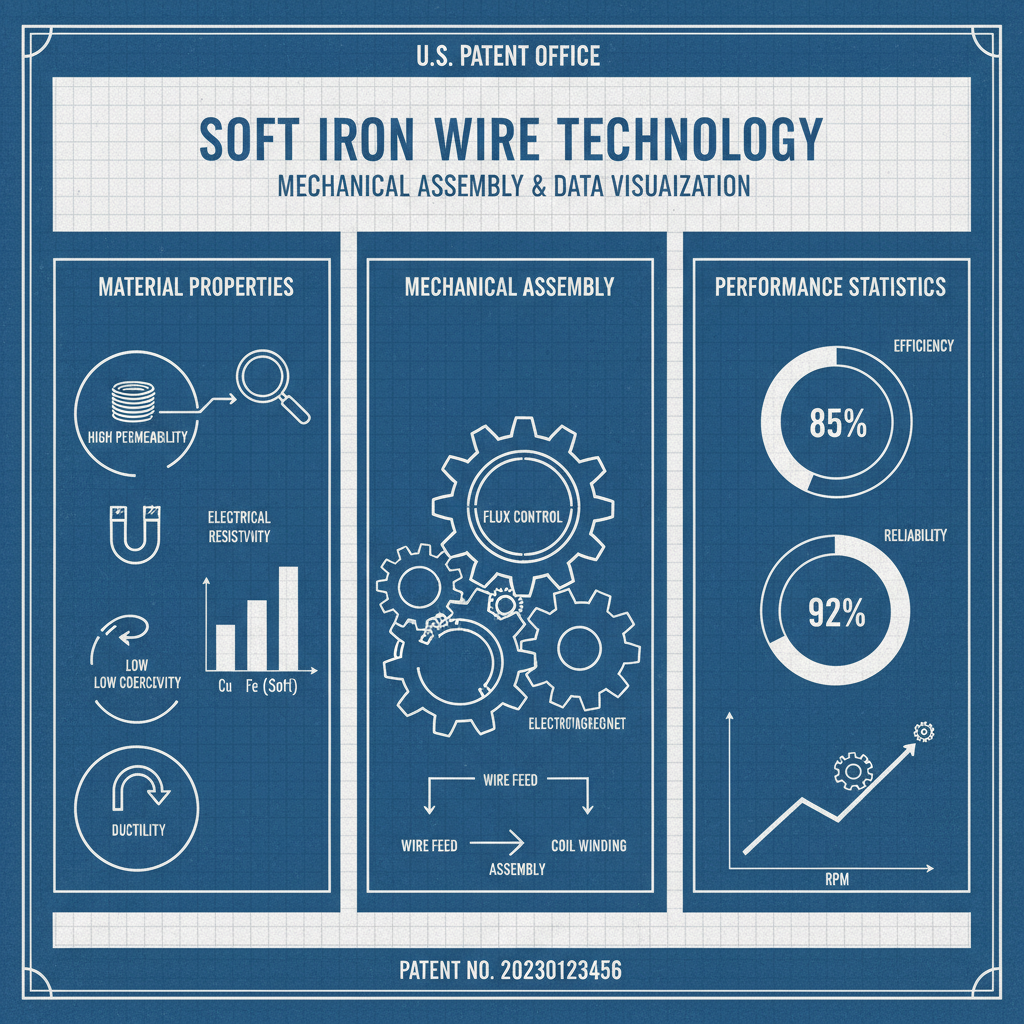
High magnetic permeability is another crucial property. Soft iron wire readily magnetizes and demagnetizes, making it exceptionally effective in creating strong electromagnets used in motors, transformers, and various sensing devices. This property is fundamental to its use in electrical applications.
Furthermore, soft iron wire exhibits relatively low hysteresis loss, meaning it consumes less energy during the magnetization and demagnetization cycle. This efficiency is critical in optimizing the performance of electrical components. Its moderate tensile strength allows it to withstand reasonable stress while remaining workable.
Key Applications and Sectors
The electrical industry heavily relies on soft iron wire for manufacturing transformer cores, electromagnets, and inductor coils. Its high permeability significantly enhances the efficiency and performance of these devices. Without soft iron wire, modern electrical grids would be far less efficient.
In construction, soft iron wire finds use in reinforcement applications, particularly in concrete structures where its flexibility allows for better distribution of stress. It's also utilized in fencing, tying materials, and temporary support structures.
Soft Iron Wire Application Breakdown
Advantages and Long-Term Value
One significant advantage of soft iron wire is its cost-effectiveness. Compared to other specialty metals, it provides a high strength-to-cost ratio, making it an economically viable choice for numerous applications. This is particularly important for large-scale projects.
From a sustainability standpoint, iron is a relatively abundant element, and recycling infrastructure for steel and iron products is well-established. This contributes to a lower environmental impact compared to materials relying on scarce resources. Choosing soft iron wire can align with environmentally conscious practices.
Future Trends in Soft Iron Wire Technology
Ongoing research focuses on improving the corrosion resistance of soft iron wire through advanced coating technologies. Techniques like galvanization, polymer coatings, and even nano-coatings are being explored to extend its lifespan in harsh environments.
Automation in wire drawing and forming processes is becoming increasingly prevalent, improving efficiency and reducing production costs. Integration of AI-powered quality control systems will also play a key role in ensuring consistent product standards.
Furthermore, the development of new alloys with enhanced magnetic properties and increased strength is continuously pushing the boundaries of what soft iron wire can achieve, opening up new possibilities in fields like renewable energy and advanced materials.
Challenges and Sustainable Solutions
Corrosion remains a significant challenge for soft iron wire, particularly in exposed environments. Without proper protection, rust can compromise its structural integrity and functionality.
Ensuring consistent quality control throughout the manufacturing process is also vital. Variations in carbon content or impurities can affect its mechanical and magnetic properties. Implementing rigorous testing and quality assurance protocols is crucial.
Sustainable solutions include utilizing recycled iron sources, optimizing production processes to minimize waste, and exploring eco-friendly coating alternatives. Investing in research and development of more durable and corrosion-resistant alloys will also be key to long-term viability.
Summary of Soft Iron Wire Challenges and Solutions
| Challenge |
Impact |
Proposed Solution |
Implementation Cost (Scale 1-10) |
| Corrosion |
Reduced lifespan, structural weakness |
Galvanization, polymer coatings |
4 |
| Quality Control |
Inconsistent material properties |
Rigorous testing, alloy refinement |
6 |
| Resource Depletion |
Dependence on mined iron ore |
Increased use of recycled iron |
3 |
| Production Waste |
Environmental impact, material loss |
Optimized wire drawing processes |
5 |
| Energy Consumption |
High energy costs, carbon footprint |
Energy-efficient manufacturing technologies |
7 |
| Sustainability Concerns |
Environmental and ethical sourcing |
Responsible sourcing and transparent supply chains |
4 |
FAQS
Soft iron wire has a very low carbon content (less than 0.08%), making it highly malleable and magnetically permeable. Steel wire, on the other hand, has a higher carbon content, resulting in greater hardness and tensile strength but reduced ductility and magnetic properties. This difference dictates their suitability for different applications – soft iron for electromagnetism, steel for structural support.
Preventing rust involves creating a barrier between the iron and the environment. Common methods include galvanization (coating with zinc), applying protective polymer coatings, regularly applying rust-inhibiting oils, or using stainless steel wire (though this is a different alloy). The best approach depends on the specific application and level of exposure.
Soft iron wire generally isn't ideal for high-temperature applications. While iron has a relatively high melting point, its magnetic properties diminish at elevated temperatures, and it can become susceptible to oxidation. For high-temperature uses, other alloys like nichrome or stainless steel are more appropriate.
Common gauges range from 12 gauge (thicker, used for fencing and structural support) to 30 gauge (thinner, used for crafts and electrical winding). The gauge number refers to the wire’s diameter – the higher the gauge number, the thinner the wire. Selecting the appropriate gauge depends on the specific application’s strength and current-carrying requirements.
Soft iron wire can be welded, but it requires specific techniques and often necessitates the use of appropriate flux to prevent oxidation. Because of its lower carbon content, it is generally more difficult to weld than steel, and the resulting weld may be weaker. Shielded Metal Arc Welding (SMAW) and Gas Metal Arc Welding (GMAW) are commonly used methods.
You can source high-quality soft iron wire from reputable metal suppliers and wire manufacturers. YJD Wiremesh offers a wide range of soft iron wire products with consistent quality and competitive pricing. Always verify the supplier's certifications and specifications to ensure the wire meets your project's requirements.
Conclusion
In summary, soft iron wire is a remarkably versatile and valuable material, underpinning countless applications across diverse industries. Its unique combination of ductility, magnetic permeability, and affordability makes it an essential component in everything from electrical systems to construction and artistic endeavors. Understanding its properties and limitations is crucial for optimizing its use and driving innovation.
Looking ahead, continued investment in sustainable sourcing, advanced coating technologies, and automated production processes will be vital to ensure the long-term viability and responsible utilization of soft iron wire. Exploring new alloy compositions and refining manufacturing techniques will further unlock its potential and address emerging challenges in a dynamic technological landscape.